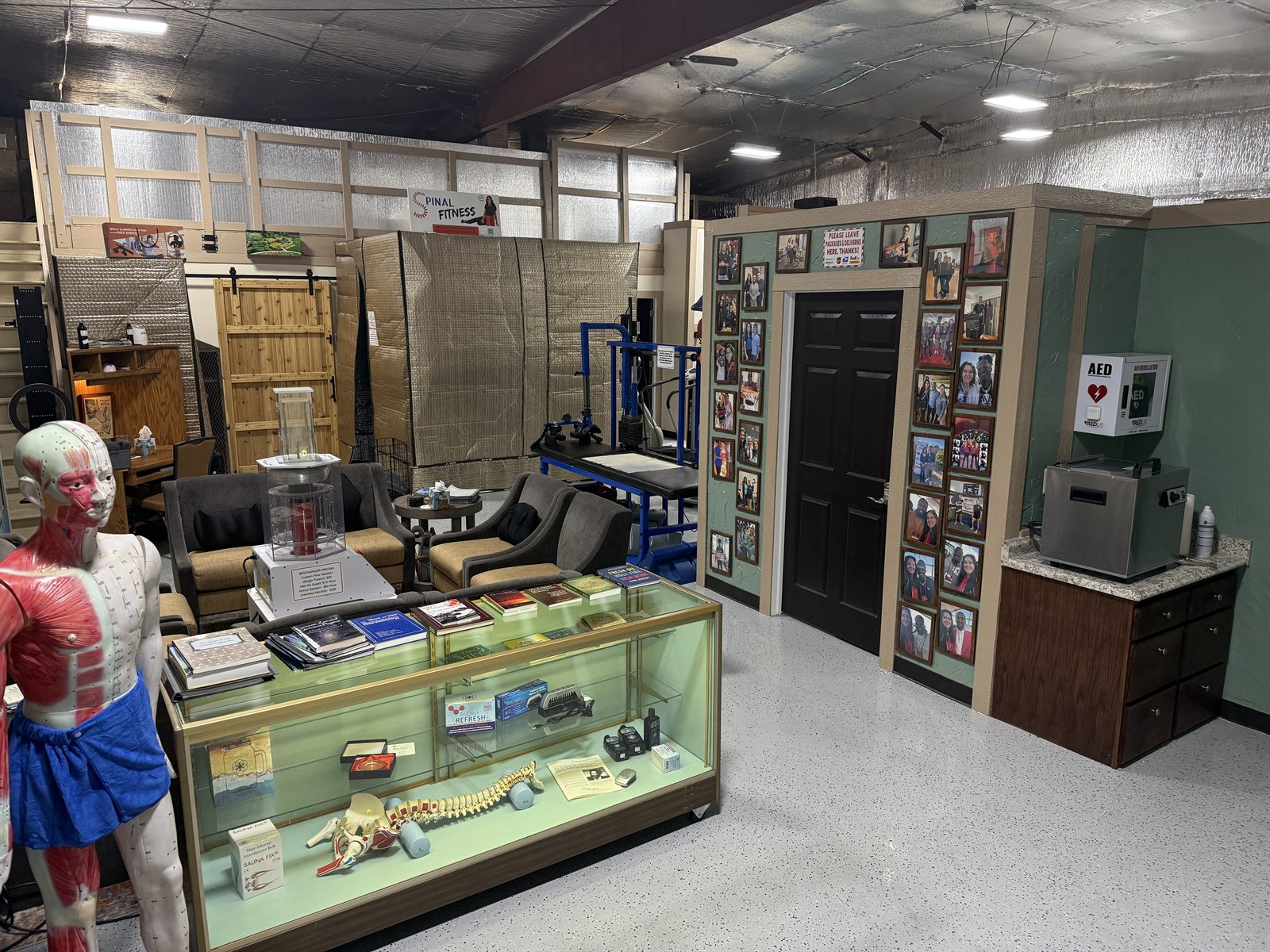

If you have been searching for detox reaction help in Kennewick, this page covers the three things Spinal Fitness Health and Wellness Center, 214 E. Albany Ave, Building E101, Kennewick, WA 99336, offers when a reaction arrives: session lengths you set inside the published ranges, a hair tissue mineral analysis retest at 3 to 5 months, and a follow-up retest review that reads the new chart against the first one. Of the equipment sessions, Biofeedback/Rife is the one where a staff member stays with you; every other equipment session is self-directed once training is complete. To arrange a retest review, call or text 509-670-9713.
What the labs call a reaction
The Analytical Research Labs (ARL) literature describes an elimination reaction as symptoms that appear while stored metals move out of tissue storage and into the blood. ARL states that a copper elimination reaction generally lasts a day or two and then subsides, and that in some cases it lasts a month or more. The same documents sort reaction symptoms into three categories: old symptoms that reappear, present symptoms that intensify, and new symptoms. ARL also records that not every person carrying stored copper shows symptoms while that copper is being eliminated.
ARL lists the triggers for a copper release as acute stress, storage saturation, the premenstrual rise in estrogen, antibiotics, and the start of a nutritional program, because any rise in metabolic rate moves copper from the liver and brain into the blood. A reaction on a hair tissue mineral analysis program is therefore read against what else changed that week.
Reaction symptoms by metal
Copper. ARL’s list is headaches, extreme fatigue, skin eruptions on the face, chest and thighs, free-floating anxiety, joint pain, nausea and discomfort over the liver.
Lead. Bone and joint pain, fatigue, abdominal pain, constipation, irritability, insomnia and a metallic taste in the mouth. ARL states that lead is to be eliminated gradually.
Cadmium. Pain in the kidney area, joint pain, a metallic taste, temporary blood-pressure changes, and fatigue as sodium drops and the oxidation rate slows. ARL gives cadmium a half-life of 17 to 30 years and a clearance time on a nutritional program of often 6 to 12 months.
Mercury and aluminum. Mercury release brings a metallic taste, kidney-area pain, fatigue and a transitory increase in fears, often followed by copper-release symptoms. ARL records that aluminum usually produces few symptoms as it is eliminated.
Three questions the labs ask first
ARL separates a retracing reaction from an unrelated illness with three screening questions. The first asks whether the person is following a properly designed program, with both the diet and the supplements the chart calls for. The second asks whether lifestyle has improved, since ARL notes that reactions often occur on vacation. The third asks whether energy rose just before the symptoms began, since ARL states that a reaction requires energy.
ARL records completion reactions: a reaction repeats a past illness, injury or infection in a shorter form. The ARL example is a person whose intestinal-flu symptoms returned one month into a program, lasted a single day, and left normal digestion behind.
Slowing or speeding a reaction
ARL records three rules for pacing a reaction. Speed a reaction when it drags on and the body cannot finish, which ARL reports most often in slow oxidizers. Slow a reaction when the symptoms are vigorous. Use a metal-specific antagonist only when the metal involved is identified on the chart.
To slow a copper elimination, ARL reduces supplements from three times a day to once a day, preferably at the evening meal, then to every other day or every third day, and raises dietary fat by 25 to 30 percent. To speed one, ARL lists zinc, manganese, molybdenum, vitamin B6 and support for the eliminative organs, including warm baths, saunas and skin brushing. At this center those supplement changes are reviewed with Eileen at the follow-up retest review, read from your own mineral pattern.
The Spinal Fitness book states that a sauna session after training ends with a shower and rehydration with minerals.
Pacing the sessions themselves
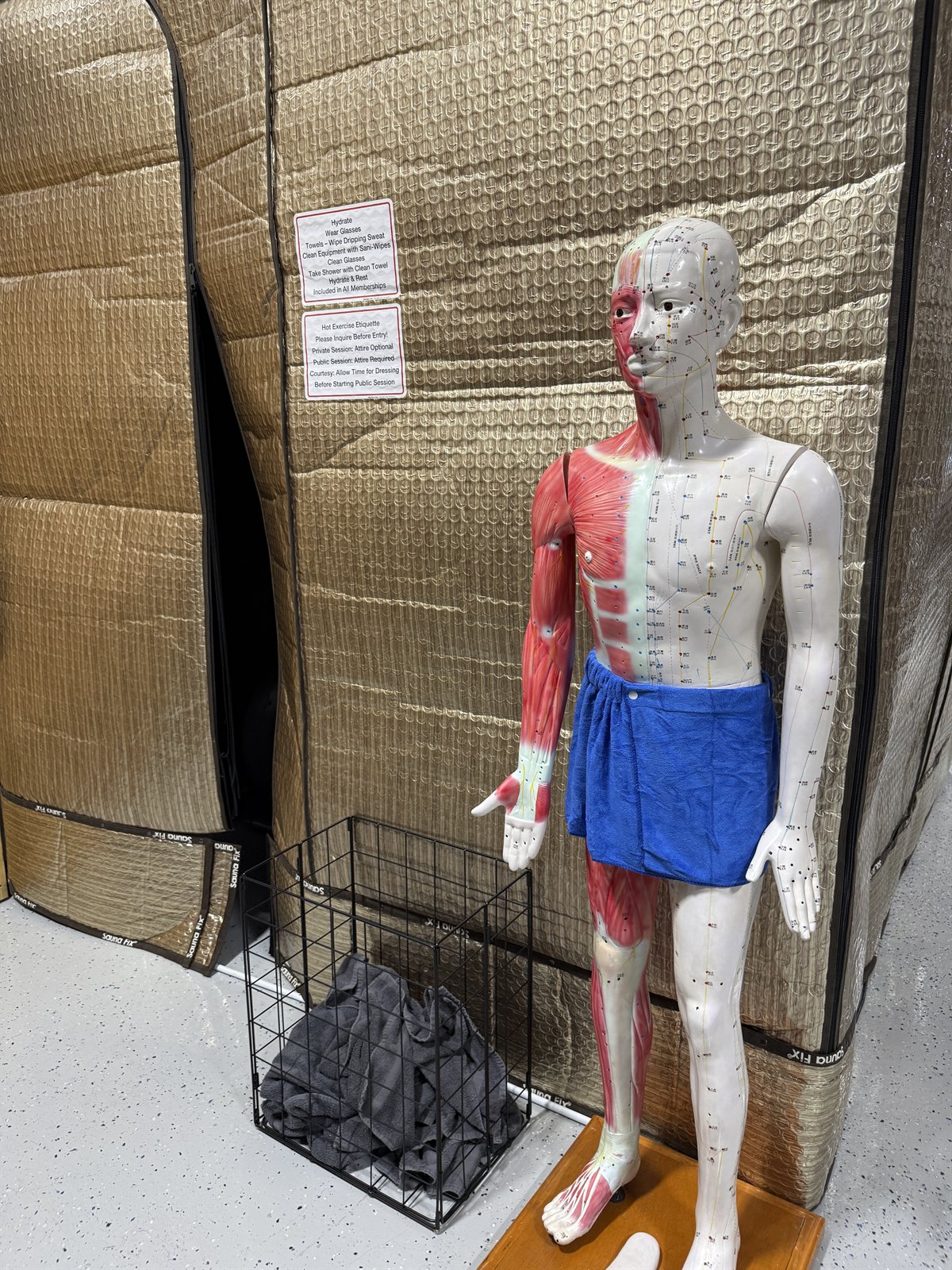
Each self-directed service has a stated session range, and the short end of a range is a valid session. The hot exercise room runs 15 to 30 minutes, in a low-EMF Sauna Fix radiant tent covering 550 to 3,000 nm, with no preheat and a maximum of 155°F. The Spinal Fitness book gives 10 to 15 minutes at a comfortable intensity for a sauna session before training.
Other ranges stated for the center: whole-body vibration 5 to 15 minutes and hyperbaric sessions of 90 minutes when booked at $100 and one hour for members. Monthly members may use the near-infrared saunas on a first-come basis, 24 hours a day, so a reaction week can hold fewer sauna sessions, shorter ones, or rest days on your own schedule.
The hot room’s facility rules also apply on a reaction week: a swimsuit for a public session, bare skin for a private session, eyewear, and sweat-wiping towels.
What a retest shows after a reaction
ARL’s reading rule is that higher toxic metals on a retest usually mean active elimination, not a worsening of toxicity. ARL also states that the elimination of a heavy toxic metal is the most common cause of a sodium-to-potassium inversion on a retest chart; Trace Elements puts the ideal Na/K at 2.4 and ARL uses 2.5. During a copper elimination, calcium tends to rise temporarily, and a later fall in calcium is read as the favorable trend.
Each hair reading averages roughly 2 to 3 months of growth, which is why retests here are set 3 to 5 months apart. The center’s guide to the follow-up appointment lists what to bring, including the written symptom list from your first test.
When a symptom goes to a licensed provider
The Spinal Fitness book lists stop signs that end a session and go to medical evaluation: new numbness or tingling, radiating symptoms, weakness, bowel or bladder changes, and sharp escalating pain. The book also states that anyone who is pregnant, heat-intolerant, severely dehydrated, or managing cardiovascular, kidney, neurological or endocrine conditions consults a qualified provider before sauna use or a detoxification program. A hair tissue mineral analysis reads mineral trends and is a screening test, so a reaction on the chart is a pattern to review, not a diagnosis.
The one staffed equipment session
During a Biofeedback/Rife session a staff member stays in the room for the whole 30 minutes or longer. Rife is sold by the session at $95, or 5 sessions for $425, with a 30-minute minimum and up to four hours in a day, and the Rife frequency session page describes it as a wellness service with its own screening questions.
Who reviews the retest
Eileen Durfee reviews every chart. She began hair tissue mineral analysis in 2010 under ARNP Julie Walker in Kennewick and worked directly with Analytical Research Labs. Eileen holds a NBS (Nutritional Balancing Science) degree, earned through Dr. Larry Wilson’s program beginning in 2011, and has practiced independently since autumn 2017. She is also NASM-CPT certified.
Booking a retest review
Retest reviews are by appointment. Call or text 509-670-9713, evenings and weekends included, and say you have a first report and want to arrange a retest. Hair tissue mineral analysis is listed at $270, and the 24/7 membership at $150 a month. A door code is issued once your training is complete, and monthly members then have 24/7 access to the hot exercise room and the other self-directed sessions. The center serves Kennewick, Pasco, Richland, West Richland, Benton City and Walla Walla.
Keep Exploring
This article is for educational purposes only and is not medical advice. Hair tissue mineral analysis is a screening test for nutritional and toxic-element patterns and is not intended to diagnose, treat, cure or prevent any disease. Spinal Fitness Health and Wellness Center is a wellness facility; please consult your own licensed provider regarding any medical question.