Back Trac Rolling in Kennewick: What the Dual-Lobe Groove Does at Each Spinal Segment

The Back Trac roller has a full-length groove and 2 lobes: each lobe contacts the paravertebral muscles on either side of the spine while the spinous processes float in the groove between them, according to Eileen Durfee’s book, Spinal Fitness. Back Trac rolling is Step 1 of the 5-step system and the book’s primary global exercise, and it is taught in one-on-one training at Spinal Fitness Health and Wellness Center, 214 E. Albany Ave, Building E101, Kennewick, WA 99336. Members hold 24/7 access by door code once their training is complete, and every Thursday from 2 to 6 PM the center is open to new visitors for a free session of one rotating service: the BioCharger NG, the 7 Wave light panel, Brown’s Gas, PEMF or the hot sauna exercise room. Spinal Fitness evaluations and training are booked appointments.
What happens at each segment
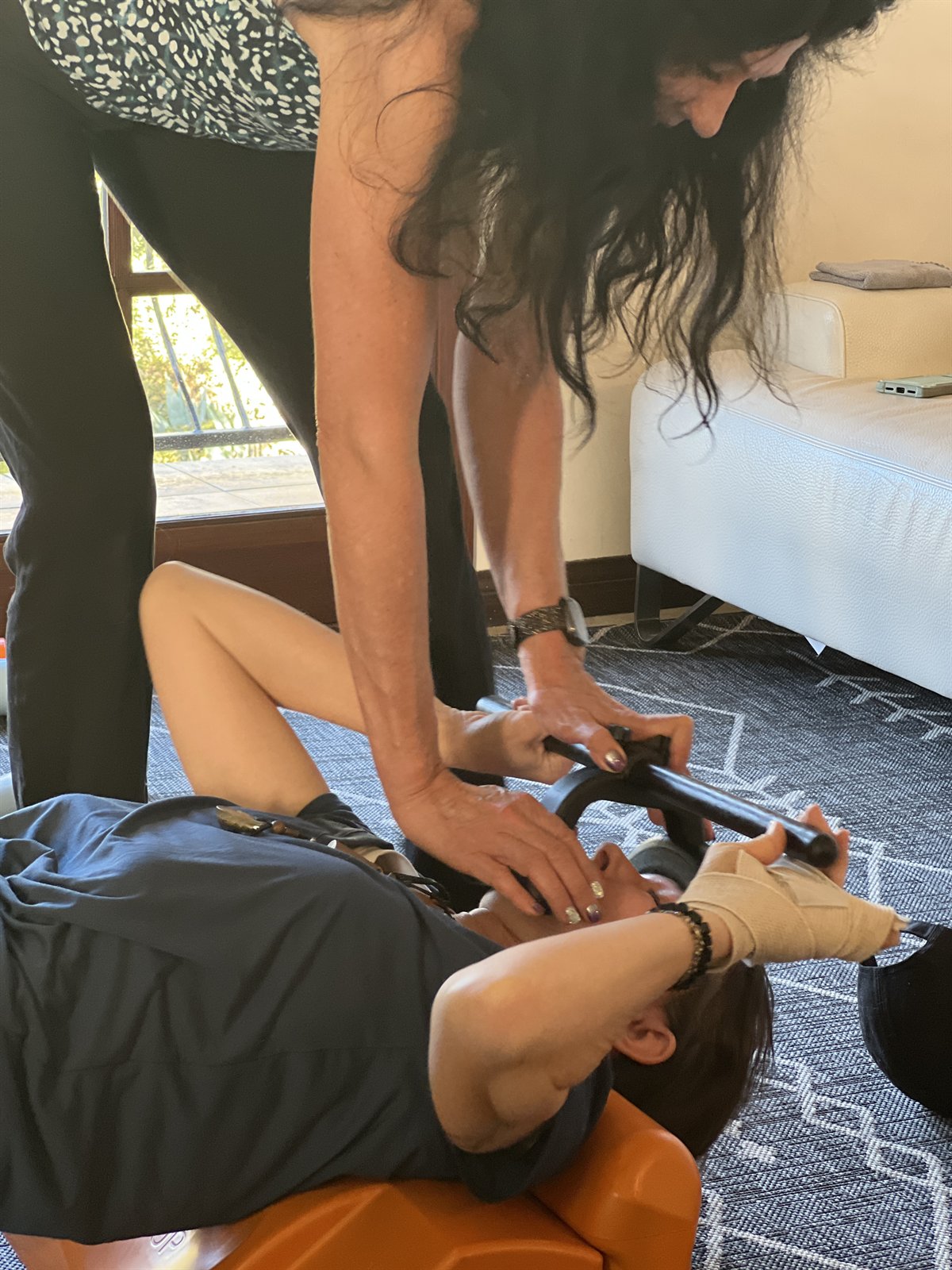
The book states the design problem first: most standard rollers press directly into the midline of the spine, which can feel sharp or irritating for someone who already holds a protective posture. The Back Trac groove protects the vertebral column centerline while the lobes apply contact at the transverse processes and the muscles beside them. The book’s caption for the roller in use: “spinal segments decompress and float as the roller contacts the lateral muscles, not the spinous processes.” The book’s course material states the mechanical result: the groove lets the spinous processes float free while the transverse processes are supported, creating segmental extension forces at each spinal level, and a flat foam roller contacts the spinous processes and cannot produce segmental extension.
The book lists 3 things Step 1 accomplishes. It restores segmental motion, the joint “give” that keeps the spine from moving as 1 stiff block. It reduces protective muscle tone, or guarding, by giving the nervous system safe, repeatable motion input. It prepares the spine for curvature work in the steps that follow. Its rationale for the decompression phase: the roller “changes pressure distribution, reduces protective tone, and helps the discs and joints experience more favorable fluid and motion dynamics.” “When motion is missing, the body substitutes tension.”
What Eileen states about the Back Trac
Eileen Durfee states that Back Trac rolling hydrates the spinal discs, opens up the nerve canals, stretches fascia and helps hydrate the fascial slings. She also states that every spinal joint has 16 different possible articulations. Her description of unweighted rolling is segmental spinal mobility, reduced guarding and preparation for decompression. In her later progression, a weight plate or the Force Applicators on the chest make the roller a fulcrum with a larger bending moment, and the core must control how far and how fast the trunk travels around it. The book’s gate for added load comes from its correction loop: a person still bracing through Step 1, 2 or 4 is “not ready for more load.”
Density, dose and technique
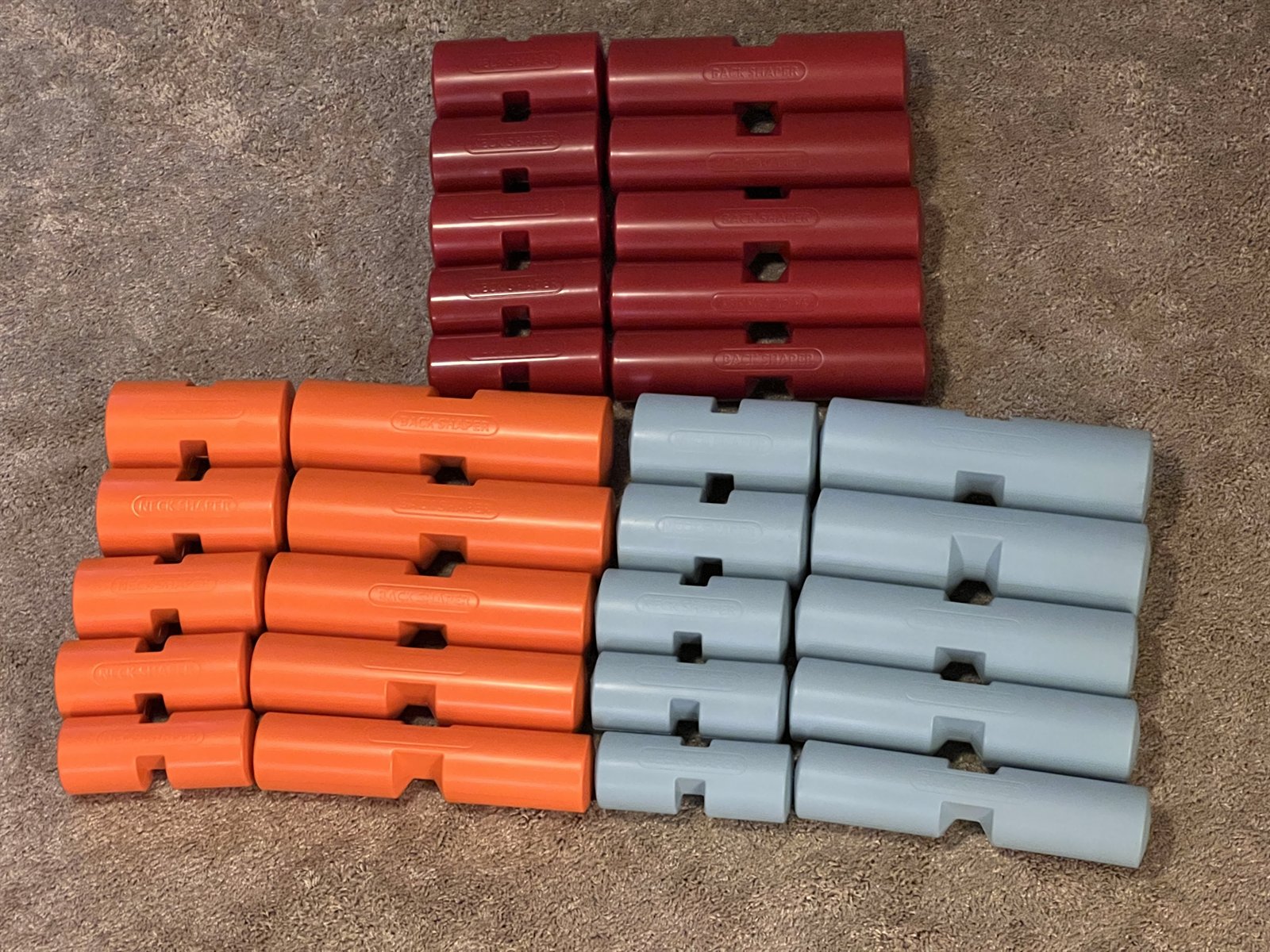
Back Trac rollers range from the softest blue through medium orange to firm red or maroon, and the book’s diameter note is that diameter determines contact depth and lever arm length at each spinal level. The book’s instruction is to start with the medium-density roller and move to the hard density only after comfort and control improve.
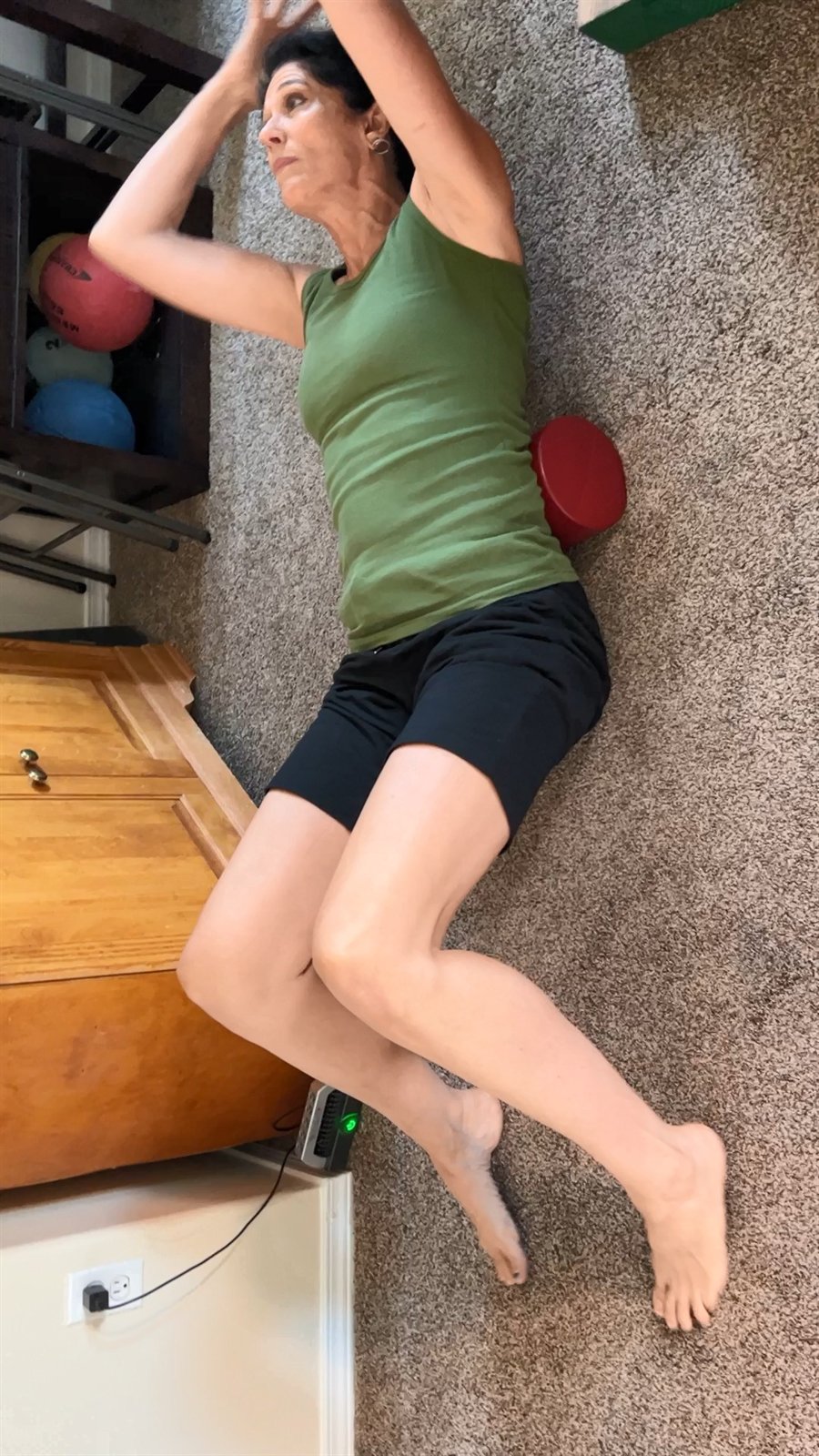
The starting dose is 30 to 60 seconds of easy passes, or 6 to 10 slow passes, once per day. As the spine tolerates the work, the dose moves to morning and evening use for a few minutes per session. The book’s protocol places the roller under the mid-back, around the lower shoulder blade region, with the spine centered in the groove. The feet roll the body a short distance in slow passes, starting with a few inches; the book’s cue is “Your legs are the speed governor.” The rolling range runs along the spine from the low back up toward the shoulder blades, with a pause and slow exhale at restricted areas so the segments can open. A soft neck collar supports the head in early sessions when the neck works harder than the mid-back.
To roll higher toward the neck, the book adds arms stretched overhead, and as an advanced option a pelvic bridge to shift weight and keep the roller from spinning out. Neck strain, dizziness, headache onset, breath-holding or a symptom increase during the bridge mean stop and regress.
Who starts with something else
The book names 2 starting exceptions that move Back Trac rolling later. A primarily cervical pattern, a forward head with a relatively functional lumbar region, starts with Neck Flexion before rolling. A high-irritability screen starts with Step 5 only, and Back Trac rolling waits until irritability reaches moderate or lower. Pain, numbness, tingling and dizziness are the book’s stop signs during rolling: stop, get evaluated, and continue with a therapeutic exercise program designed by a Spinal Fitness expert.
Learning it in Kennewick
The 60-minute Spinal Fitness Evaluation ($150) records the back-pain history, includes 20 minutes over the Neck and Back Shaper rolls, produces a PostureScreen software report printed for the client, and ends with the first therapeutic exercises. One-on-one training with Eileen, an NASM Certified Personal Trainer, is $50 a session or $250 for 6 sessions; the initial training session runs 30 minutes and follow-up sessions run 20 minutes. Call or text 509-670-9713, evenings and weekends included. From 214 E. Albany Ave, the center serves Kennewick, Pasco, Richland, West Richland, Benton City and Walla Walla.
Keep Exploring
This article is for educational purposes only.