Pain, Numbness, Tingling, Dizziness: The Spinal Fitness Stop Signs in Kennewick

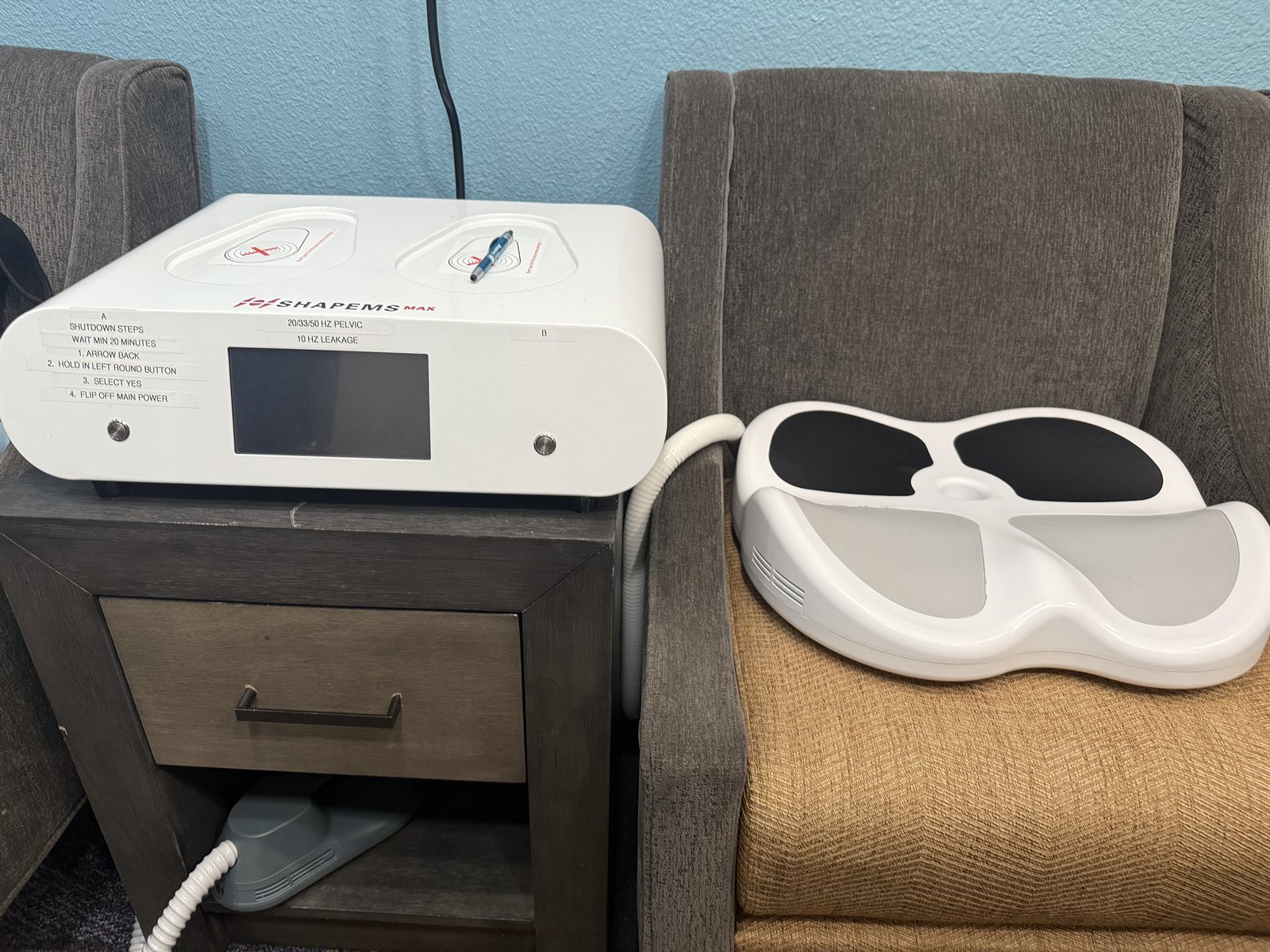
Eileen Durfee’s book, Spinal Fitness, names pain, numbness, tingling and dizziness as stop signs. When one of them appears during an exercise, the exercise stops, the person gets evaluated, and training resumes as a therapeutic exercise program designed by a Spinal Fitness expert. The book’s short form of the training rule is “Strain is okay. Pain is a stop.” At Spinal Fitness Health and Wellness Center, 214 E. Albany Ave, Building E101, Kennewick, WA 99336, that program is built in a 60-minute Spinal Fitness Evaluation and taught in one-on-one training. Members hold 24/7 access by door code once their training is complete, and every Thursday from 2 to 6 PM the center is open to new visitors for a free session of one rotating service: the BioCharger NG, the 7 Wave light panel, Brown’s Gas, PEMF or the hot sauna exercise room. Evaluations and training are booked appointments.
Strain and pain are 2 different signals
The book lists 4 universal training rules: strain is acceptable and pain is not; every repetition is controlled, with no speed; neutral alignment comes before effort; and the stop signs pause training. For Neck Flexion the book states the first rule directly: “You should feel muscular strain, but not pain.” Strain also sets the training dose. The book’s progression rule raises reps, range or density only when the current dose no longer produces the intended strain, or when form is cleaner with less compensation than in the previous session.
Range of motion follows the same rule. In Neck Flexion, beginners may move only 1 or 2 inches at first, and the book’s instruction is never to force range of motion. In the Sit-Up over the PowerCushion, the recline goes only as far as the neck stays neutral, which the book states may be only an inch or 2 early on.
Where each stop sign appears in the book
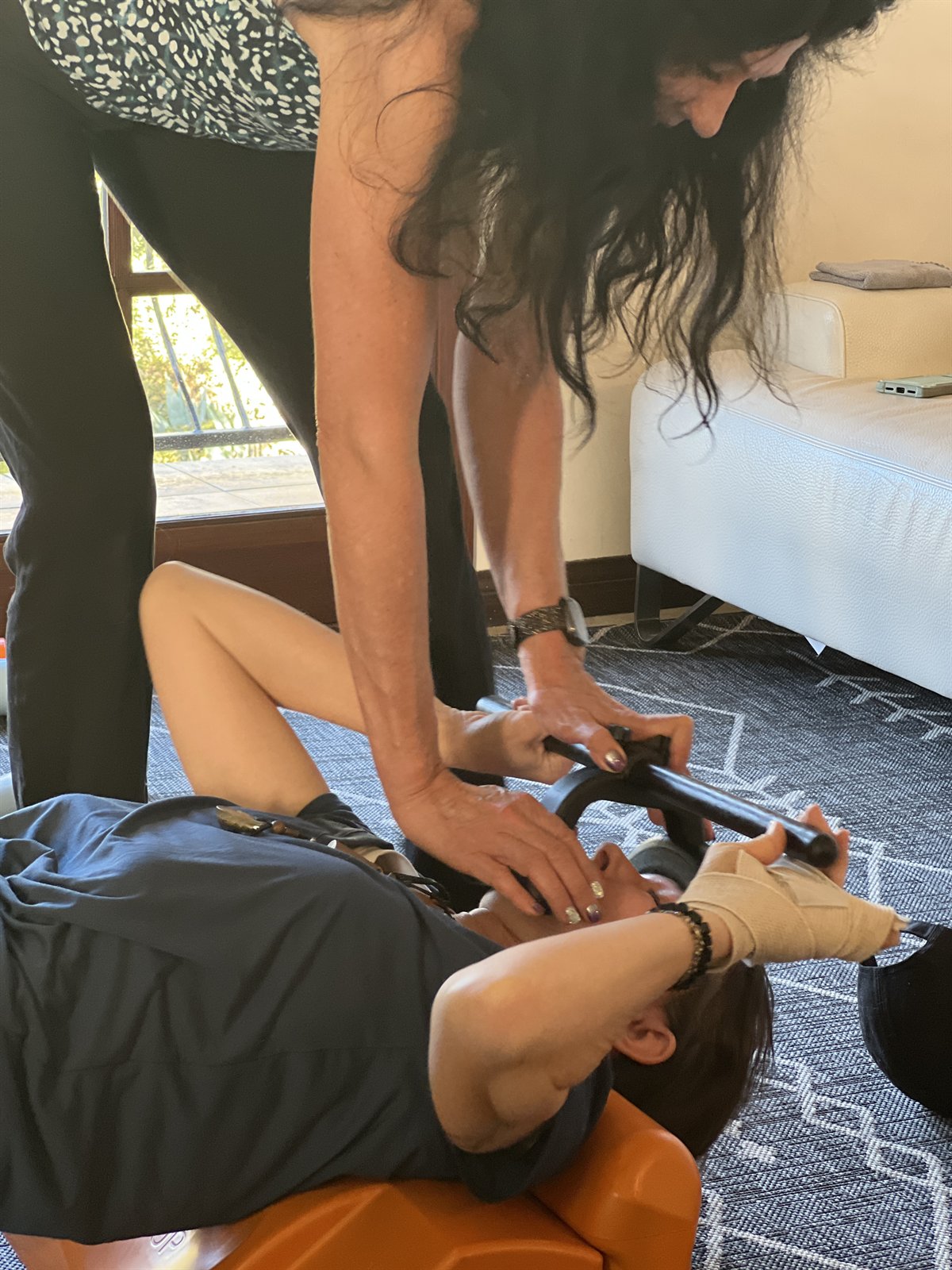
Neck Flexion (Step 4). “Pain, numbness, tingling, dizziness, visual changes, or headache spikes are stop-signs.” The book’s instruction is to reduce exercise intensity immediately and get evaluated.
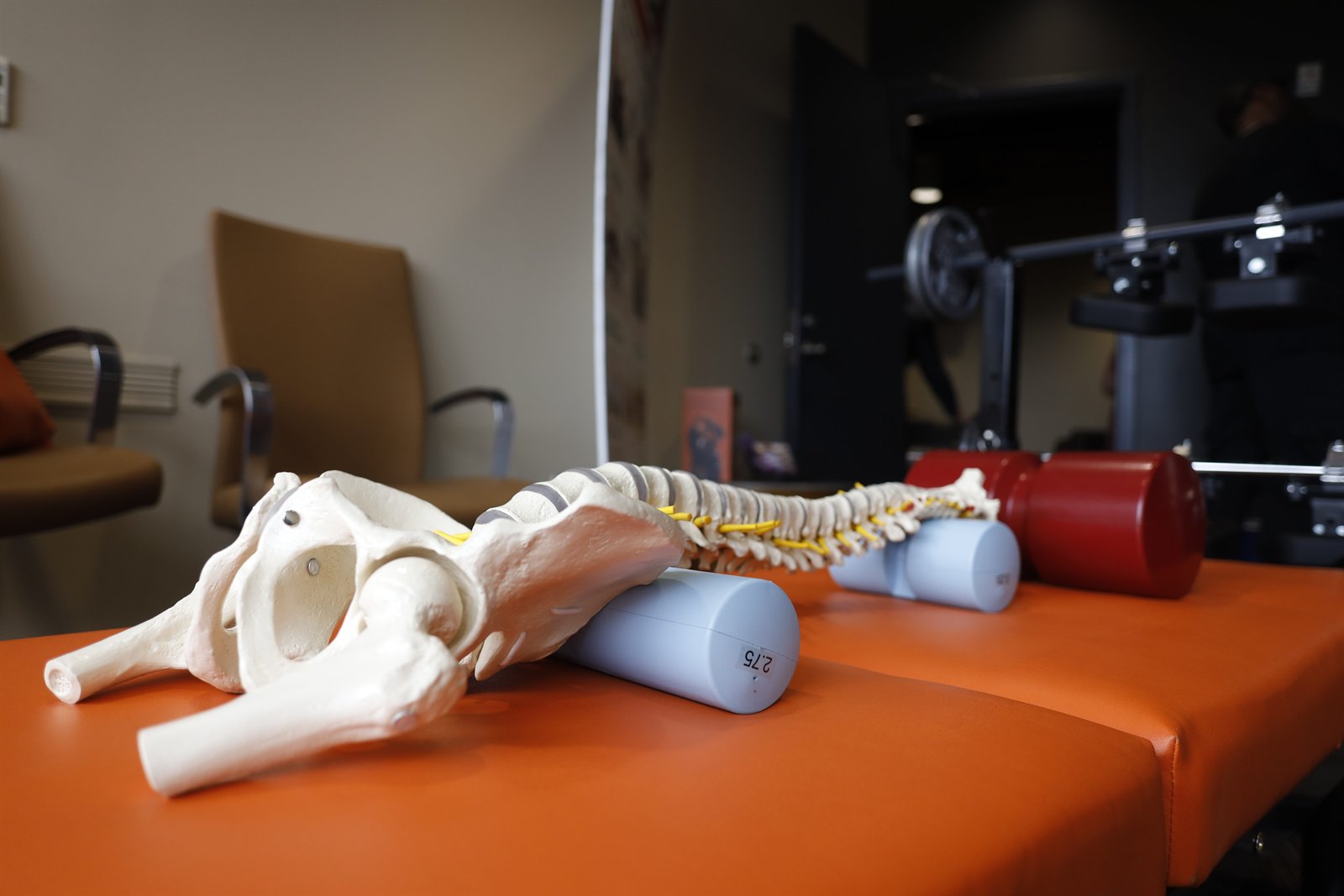
The Neck and Back Shaper rolls (Step 5). The goal of a roll is a supported curve without pain, pinching, numbness or tingling, or breath restriction. Used as braces under load, the rolls should never create pain, numbness or tingling, dizziness, headache spikes, or a feeling of being “jammed.”
Back Trac rolling (Step 1). When the pelvis is bridged to roll higher toward the neck, neck strain, dizziness, headache onset, breath-holding or a symptom increase mean stop and regress, and the default stays the same: no aggressive rolling into the neck.
Every session. The book’s general list adds new numbness or tingling, radiating symptoms, weakness, bowel or bladder changes, or sharp escalating pain, any of which pauses training.
Heat. In the Sauna Fix chapter, dizziness, weakness, headache, racing heart, nausea or unusual fatigue are signs to stop, cool down, hydrate and reassess.
What the book does after a stop sign
The first adjustment is to the exercise input: for the Neck and Back Shaper rolls, the book’s order is to reduce diameter or density, reduce load, or remove the roll and return to the recovery protocol. The book then grades irritability in 3 levels. Low irritability means symptoms are infrequent and do not linger after activity. Moderate means symptoms appear with moderate activity and take time to settle. High means symptoms appear with minimal activity and linger.
A high-irritability start uses Step 5 only, the Spinal Twist followed by supported rest on the Shaper rolls, because the book states that supported rest in a neutral position is the most the nervous system can accept at that stage. Back Trac rolling, the Sit-Up and the Pelvic Tilt wait until irritability reaches moderate or lower, and the person is re-screened after 2 to 3 sessions before progressing.
Why the location of a symptom matters
The book’s Spinal Fitness Assessment Index scores pain by where it shows up, under what load it appears, and what movement reduces or worsens it, not only by how much pain exists. Its examples: a neck complaint may reflect a thoracic or pelvic pattern, and a hamstring complaint may be a postural stabilization pattern rather than a flexibility limit. The book also states the mechanism behind muscle guarding: “When motion is missing, the body substitutes tension.” Its 5-phase correction loop therefore starts with decompression, which reduces protective tone, before any corrective loading.
The program after the evaluation
At the Kennewick center the therapeutic exercise program is designed by Eileen Durfee, a Nationally Certified Spinal Fitness Specialist and NASM Certified Personal Trainer who wrote the Spinal Fitness book on the mechanics taught by Dr. John S. Scherger, D.C. (1950-2016). The 60-minute evaluation ($150) records the history, runs a PostureScreen software scan with a printed report, includes 20 minutes over the rolls, and ends with the first therapeutic exercises. One-on-one training is $50 a session or $250 for 6 sessions; the initial training session runs 30 minutes and follow-up sessions run 20 minutes. Call or text 509-670-9713, evenings and weekends included; the center serves Kennewick, Pasco, Richland, West Richland, Benton City and Walla Walla.
Keep Exploring
This article is for educational purposes only.