Neck and Back Shaper Roll Sizing in Kennewick: 5 Diameters, 3 Densities and the Starting Rule

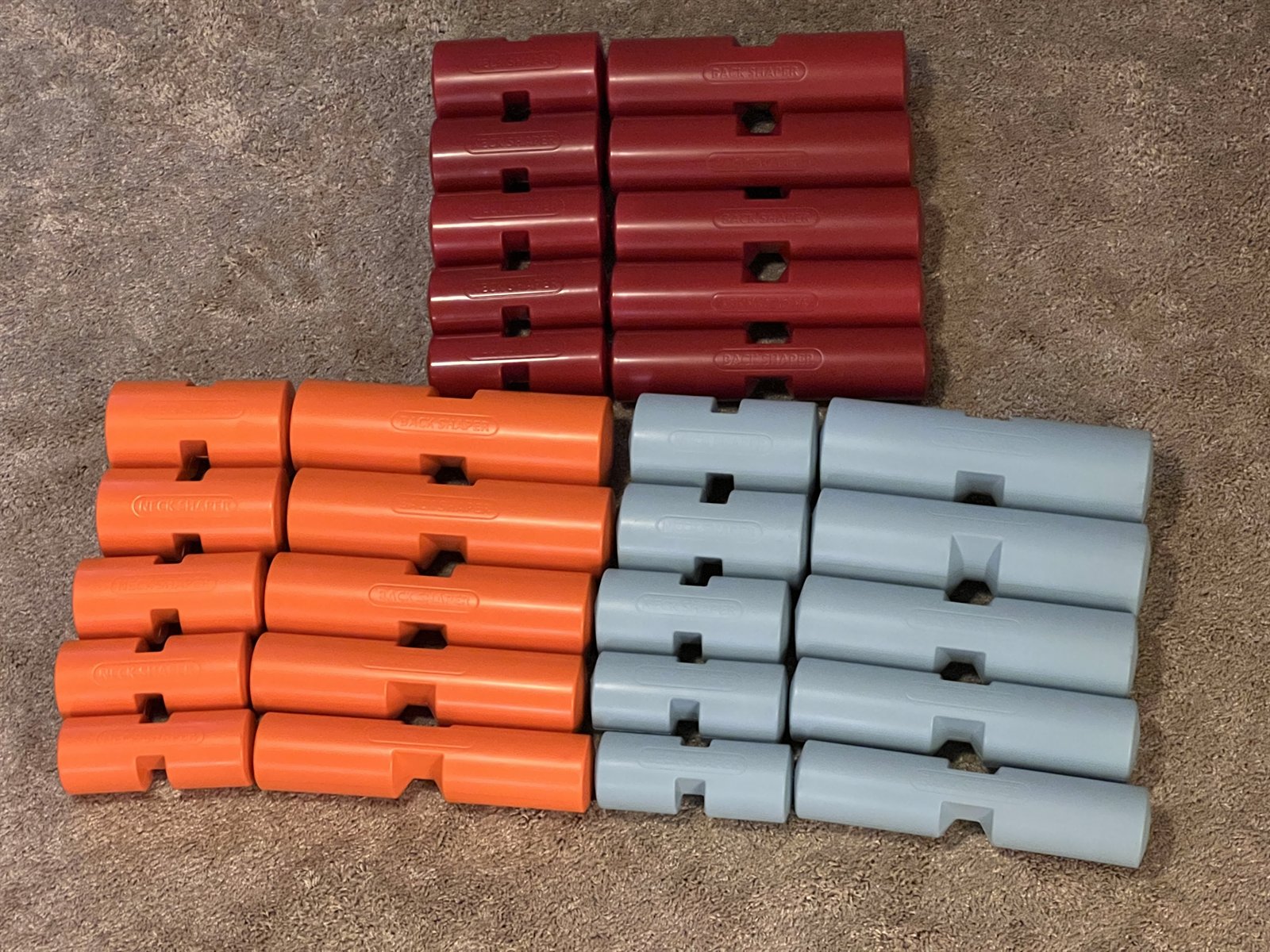
Neck and Back Shaper rolls come in 5 diameters, 2.75, 3.0, 3.25, 3.5 and 3.75 inches, according to Eileen Durfee’s book, Spinal Fitness; the Neck Shaper is 7 inches long and the Back Shaper is 12 inches long. The evaluation page at Spinal Fitness Health and Wellness Center adds that the rolls come in 3 densities, and that the standard starting setup is 2 rolls, 1 for the neck and 1 for the low back, which together run about $60 to $120 depending on sizing. The book’s selection rule: “A flatter or stiffer spine typically starts better with a smaller diameter and softer density.” The center is at 214 E. Albany Ave, Building E101, Kennewick, WA 99336. Members hold 24/7 access by door code once their training is complete, and every Thursday from 2 to 6 PM the center is open to new visitors for a free session of one rotating service: the BioCharger NG, the 7 Wave light panel, Brown’s Gas, PEMF or the hot sauna exercise room. Spinal Fitness evaluations and training are booked appointments.
What the rolls do under the spine
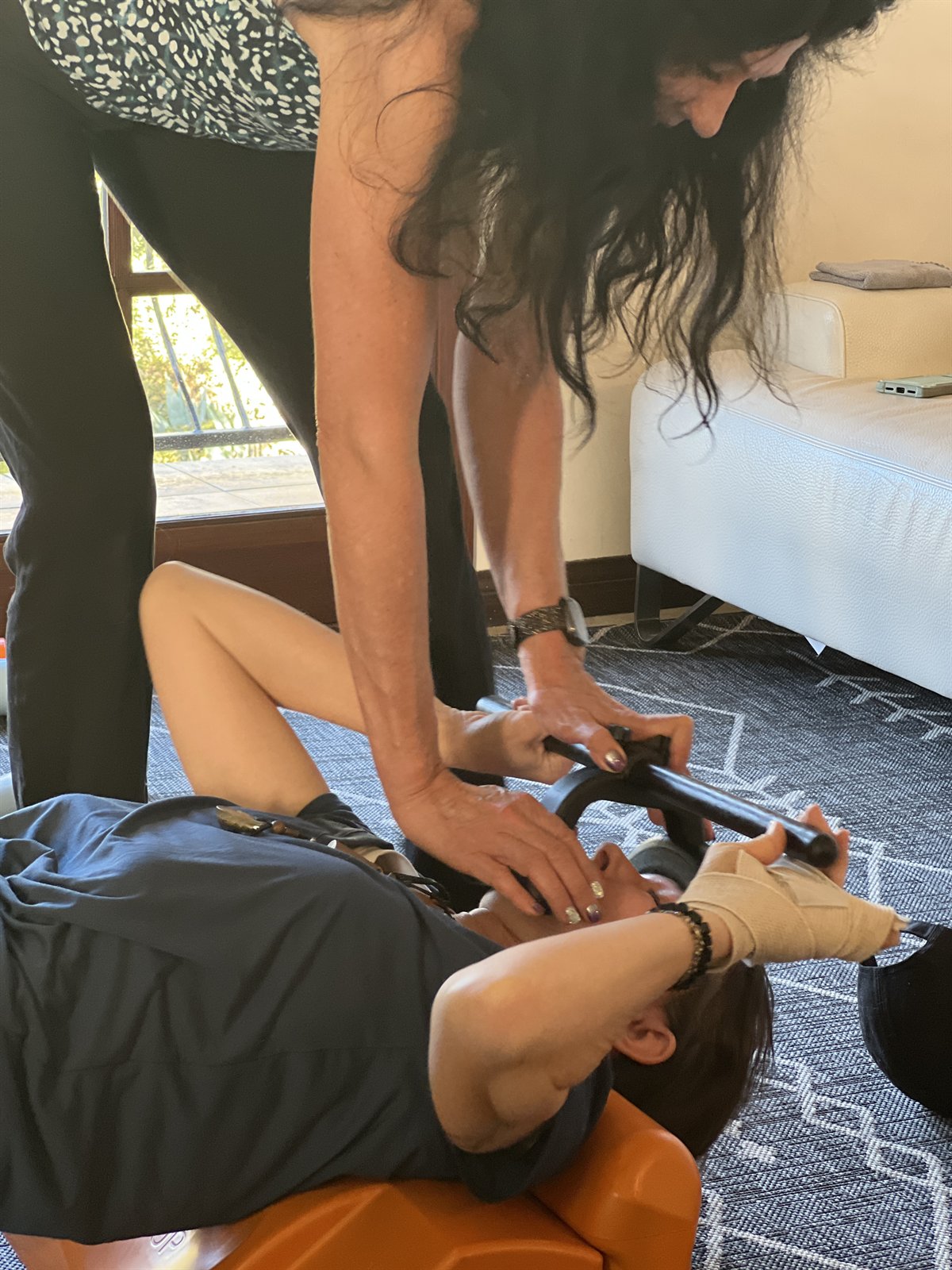
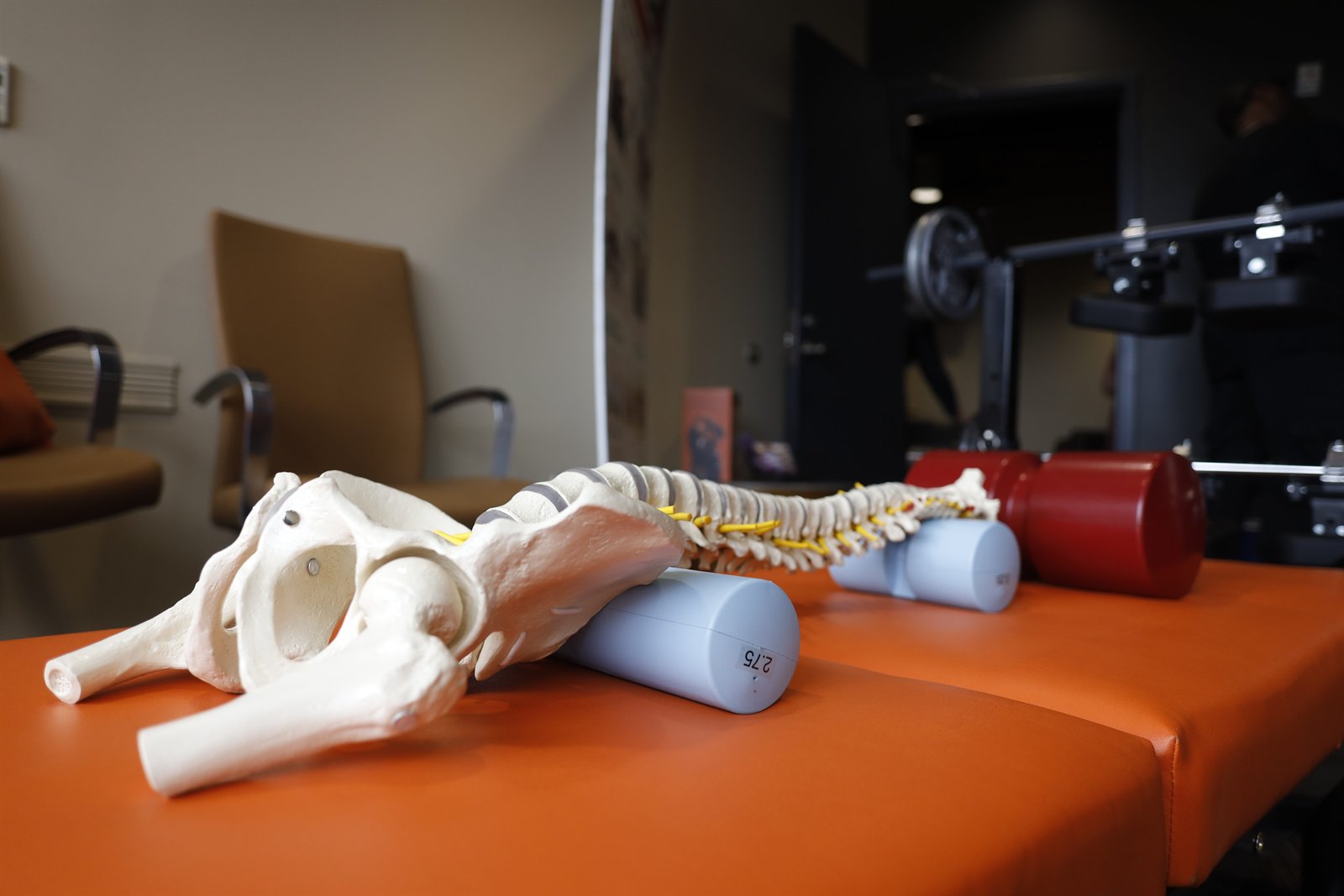
Each roll has a center groove so the spinous processes, the bony points down the middle of the spine, “float” rather than being pressed into the support. The rolls are used in Step 5 of the system: 25 seated Spinal Twist reps, counting left and right as 1 rep, followed immediately by supported rest over the neck and back rolls. The book states the purpose of the rest phase: “to let the body relax enough that alignment can settle while the spine is supported.” In the Scherger model the twist helps the center of the disc behave more fluidly for a short window, and the supported rest then lets the spine settle toward improved curvature while the muscles downshift out of guarding.
The book describes the twist that comes before the rolls as “a motion-quality exercise that helps your discs and soft tissues become more responsive to shape change.” It states that Step 5 gives the joints, discs, fascia and nervous system a chance to settle into a more favorable shape while gravity is partially taken off the system.
The book’s starting rule
The goal of the selection rule is a supported curve without pain, pinching, numbness or tingling, or breath restriction. When in doubt, the book starts smaller and softer and progresses in a fixed order: time on the roll first, building toward the 18 to 20 minute cap, then diameter, then density. The book gives no size chart by height, weight or sex; the evaluation page states that the right combination depends on the person’s frame, existing curves and how the spine currently moves.
The surface under the spine follows a 3-stage progression: a bed or massage table, then a mat, then a firm floor as tolerance improves. Folded towels are the book’s beginner alternative to a roller, because they can be rolled to a custom diameter and firmness.
Why a roll that is too big works against the step
The evaluation page states the reason sizing matters: a roll too large or too firm for the person’s build keeps the body braced, and bracing is the opposite of what Step 5 requires. The page describes the receptors involved: muscle spindles monitor the length and speed of a stretch, Golgi tendon organs monitor tension, and mechanoreceptors report position and pressure. With time and no load their protective signals settle, which takes about 18 minutes in this system. The book caps the supported rest at 18 to 20 minutes, states that longer sessions can cause the nervous system to lose tension in ways that may increase instability, and always places the twist before the rest.
3 ways to get sized in Kennewick
The evaluation page lists 3 routes. The first is to try the actual rolls at the center during business hours: call or text to arrange a time, lie over the rolls yourself with a few cues, feel the difference between diameters and densities, and buy the pair that fits. Trying the rolls is not a paid training session. The second is a $25 Sizing Kit for people who cannot come in; the page states that its pieces double as massage therapy balls once the rolls are chosen. The third is the $150, 60-minute Spinal Fitness Evaluation, which includes sizing along with 20 minutes over the rolls, the back-pain history, a PostureScreen software report printed for the client, and the first therapeutic exercises.
Rolls as braces during strength training
The book also uses the rolls during selected strength exercises. On the leg press or hack squat, supporting the low-back curve reduces flattening and allows fuller hip range of motion; on the bench press, supporting the natural curves keeps the rib cage, pelvis and shoulder girdle in better alignment. If symptoms increase, the book’s order is to reduce diameter or density, reduce load, or remove the roll. Pain, numbness, tingling and dizziness are the book’s stop signs: stop, get evaluated, and continue with a therapeutic exercise program designed by a Spinal Fitness expert.
Booking
One-on-one Spinal Fitness training with Eileen Durfee, an NASM Certified Personal Trainer, is $50 a session or $250 for 6 sessions; the initial training session runs 30 minutes and follow-up sessions run 20 minutes. Members on the $150 monthly plan use the general and spinal fitness equipment on their own schedule after training. Call or text 509-670-9713, evenings and weekends included. From 214 E. Albany Ave, the center serves Kennewick, Pasco, Richland, West Richland, Benton City and Walla Walla.
Keep Exploring
This article is for educational purposes only.