Recovery Between Training Days: Dose, the Rolls and Minerals in the Spinal Fitness Method

Eileen Durfee’s book, Spinal Fitness, sets 3 dosing levers for training, duration, intensity and frequency, and states that frequency “is the most powerful lever for building postural adaptation over time.” Its rule is “The body adapts to the most consistent stimulus, not the most intense one,” and its Neck Flexion micro-dose of 6 repetitions, 6 times a day, applies that frequency on training days and between them at Spinal Fitness Health and Wellness Center in Kennewick, WA.
What adaptation requires
The book’s adaptation principle: “the human body adapts to the effects it is consistently subjected to.” Adaptation requires active function against the appropriate resistance, applied from the anterior direction, which is why all 5 Spinal Fitness steps work from the front: Back Trac rolling, the Pelvic Tilt over a fulcrum, the Sit-Up over the PowerCushion, Neck Flexion, and the twist with the Neck and Back Shaper rolls. The book classifies the passive rest over the rolls as “a preparation, not an adaptation stimulus.” Both are needed: the exercise sets the stimulus and the rest prepares the structure.
The supported rest: 18 to 20 minutes
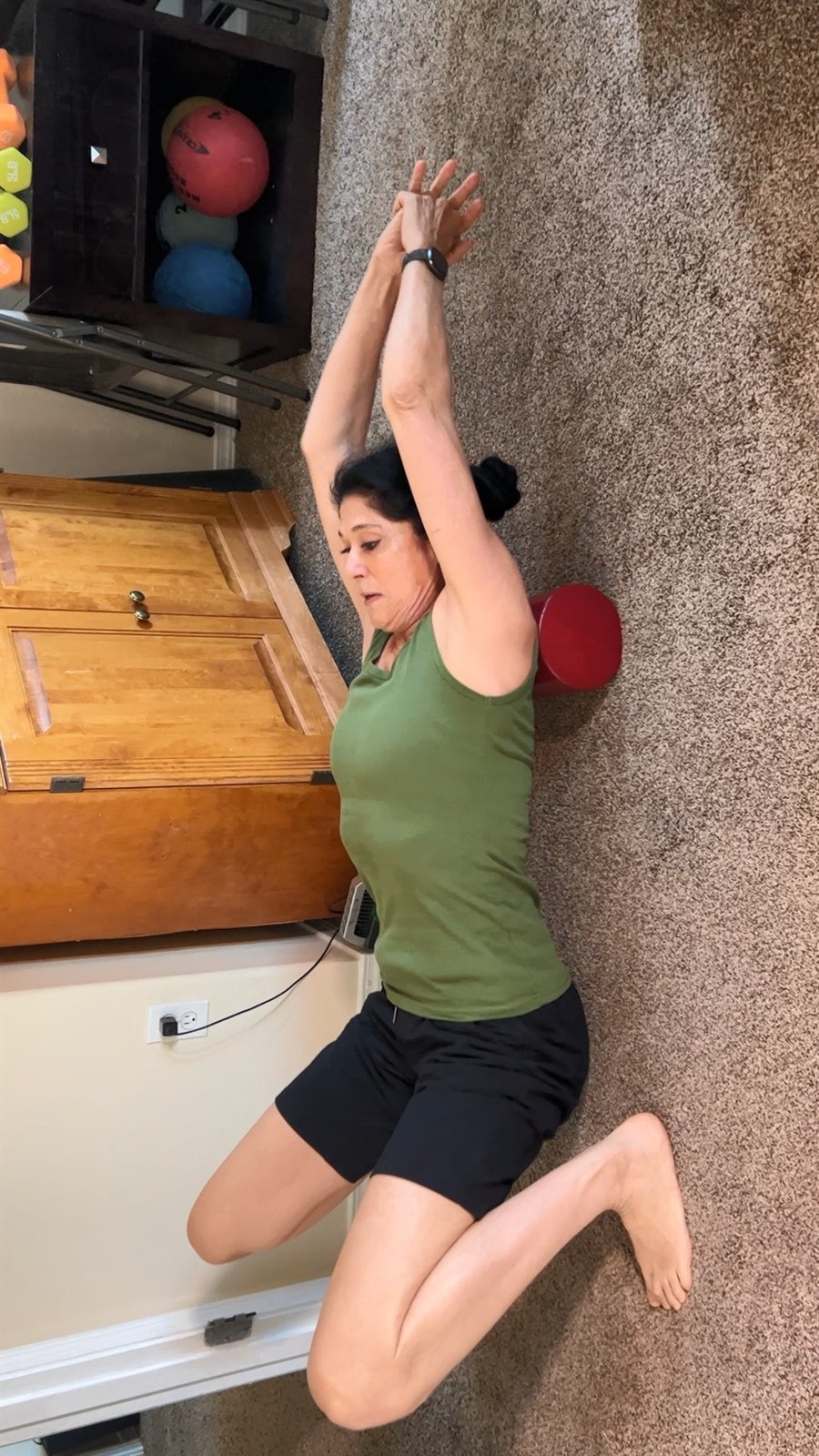
Step 5 ends a session with the twist, 25 seated repetitions with left and right counting as 1, followed by rest on the Neck and Back Shaper rolls. The book caps that rest: “Cap the supported rest phase at 18-20 minutes. Longer sessions can cause the nervous system to lose tension in ways that may increase instability. Always perform the twist before the supported rest – not after.” Its stated mechanism is that the rest gives the joints, discs, fascia and nervous system a chance to settle into a more favorable shape while gravity is partially taken off the system. The book lists Step 5 as the step that downshifts tone, supports alignment retention, and improves recovery and sleep quality. It lists the best times as before bed, after strenuous activity and after long driving days. The 60-minute Spinal Fitness evaluation includes 20 minutes lying over the rolls.
Discs recover by motion
The book states that after early adulthood, discs rely heavily on mechanical motion to circulate nutrients inward and remove metabolic waste outward, and calls the process essentially osmotic: “Compression squeezes fluid out of the disc. Decompression draws fresh fluid back in.” A day of sitting interrupts that exchange; the book states that sitting reduces normal movement-based disc hydration. Its desk standard keeps the exchange going on non-training days: micro-breaks of 10 to 30 seconds every 45 to 60 minutes, with 2 to 3 Neck Flexion repetitions, standing and a brief walk.
When to progress
The book’s progression rule: progress reps, range or density only when the current dose no longer produces the intended strain, or when form is cleaner than in the previous session. “Enthusiasm is not a progression criterion.” Its Neck Flexion schedule starts at 6 repetitions, 6 times a day, and moves to 10 repetitions when 6 no longer strain. The book’s universal rule is “Strain is okay. Pain is a stop.” Pain, numbness, tingling and dizziness are the book’s stop signs: they are signs to stop, get evaluated, and then proceed with a therapeutic exercise program designed by a Spinal Fitness expert.
Cellular energy between sessions
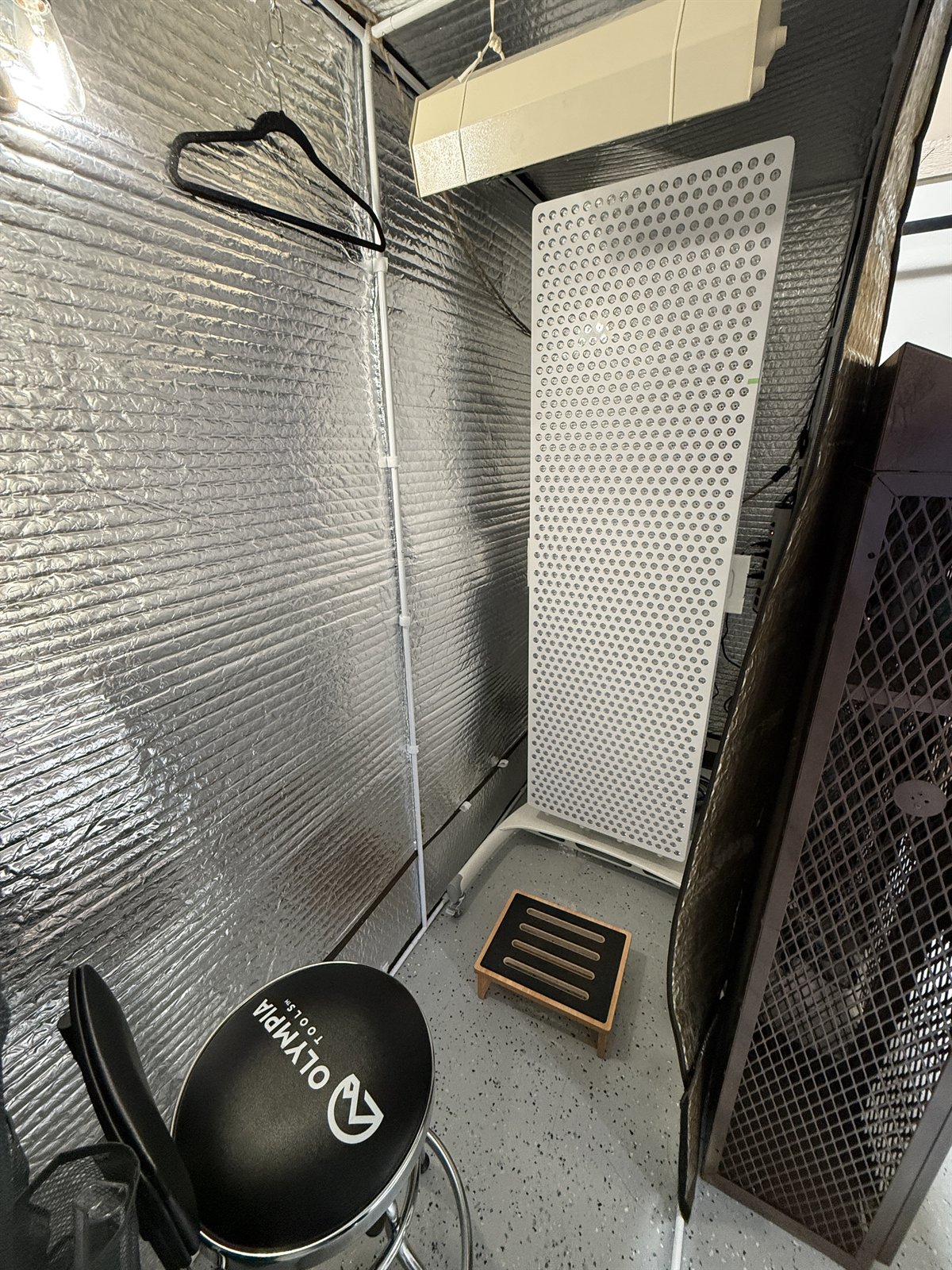
Chapter 20 states that healing requires ATP, and lists red and near-infrared light, heat, oxygen, circulation, minerals, protein, sleep and appropriate pacing as supports for cellular energy production. The book’s post-training sauna sequence is to complete training, rest briefly, hydrate, use the sauna at comfortable intensity, then shower and rehydrate with minerals.
Sodium-to-potassium, calcium-to-potassium and sodium-to-magnesium between sessions
The book states that mineral ratios describe the biological environment the exercises work within. A person with an imbalanced sodium-to-potassium ratio may struggle to recover between training sessions; the ideal sits at 2.4 to 2.5 across the 2 laboratories. The book calls calcium-to-potassium the thyroid ratio: above the 4 to 4.2 ideal it reads as a sluggish thyroid trend, which the book links to feeling cold, stiff and slow to adapt. It calls sodium-to-magnesium the adrenal ratio, a gauge of energy output, stress tolerance and stamina: below the 4 to 4.17 ideal it reads as a low adrenal trend, which the book links to poor stamina and a need for more conservative progression. The mild hyperbaric service page states that many active members schedule a session on rest days as quiet, screen-free time; membership sessions are 1 hour. The center offers hair tissue mineral analysis at $270, processed by Trace Elements, Inc.
Training in Kennewick
The Spinal Fitness evaluation is $150 and takes 60 minutes: the 20 minutes over the rolls, a discussion of back history, a PostureScreen software scan with a printed report, and the first therapeutic exercises. Training sessions are $50: the initial session is 30 minutes and follow-up sessions are 20 minutes, booked with Eileen Durfee, a NASM Certified Personal Trainer and the inventor of Spinal Fitness. Spinal Fitness Health and Wellness Center is at 214 E. Albany Ave, Building E101, Kennewick, WA 99336; call or text 509-670-9713, evenings and weekends included. Members use their door code for 24/7 access once training is complete. Every Thursday from 2 to 6 PM new visitors can come in for a free session of the rotating service; evaluations and training are always booked.
Keep Exploring
This article is for educational purposes only.