The PowerCushion in Kennewick Training: One Fulcrum for the Pelvic Tilt and the Sit-Up

The PowerCushion is the fulcrum for 2 of the 5 Spinal Fitness steps, the Pelvic Tilt and the Sit-Up, and its geometry is specific: the sacrum and hips hang free in a cutout while the lumbar spine from L4 upward rests on the supported surface, according to Eileen Durfee’s book, Spinal Fitness. Both exercises are taught in one-on-one training at Spinal Fitness Health and Wellness Center, 214 E. Albany Ave, Building E101, Kennewick, WA 99336, and members use the center’s spinal fitness equipment 24/7 by door code once their training is complete. Every Thursday from 2 to 6 PM the center is open to new visitors for a free session of one rotating service: the BioCharger NG, the 7 Wave light panel, Brown’s Gas, PEMF or the hot sauna exercise room. Spinal Fitness evaluations and training are booked appointments.
2 reasons the fulcrum changes an exercise
The book credits the cushion’s function to Scherger’s research and gives 2 reasons the fulcrum makes the exercise corrective. First, it sets the spine to function as if it already has proper posture: a body that has lost its curves cannot generate the correct leverage from its actual position, so the fulcrum imposes the geometry that proper curves would provide. In the book’s words, the exercise “is not just training toward the right posture – it is training from it.” Second, the fulcrum is a fixed external stop. Without it, a sit-up from a flat or reversed-curve spine generates posterior shear that ligaments and deep muscles must stabilize; the fulcrum intercepts those forces externally.
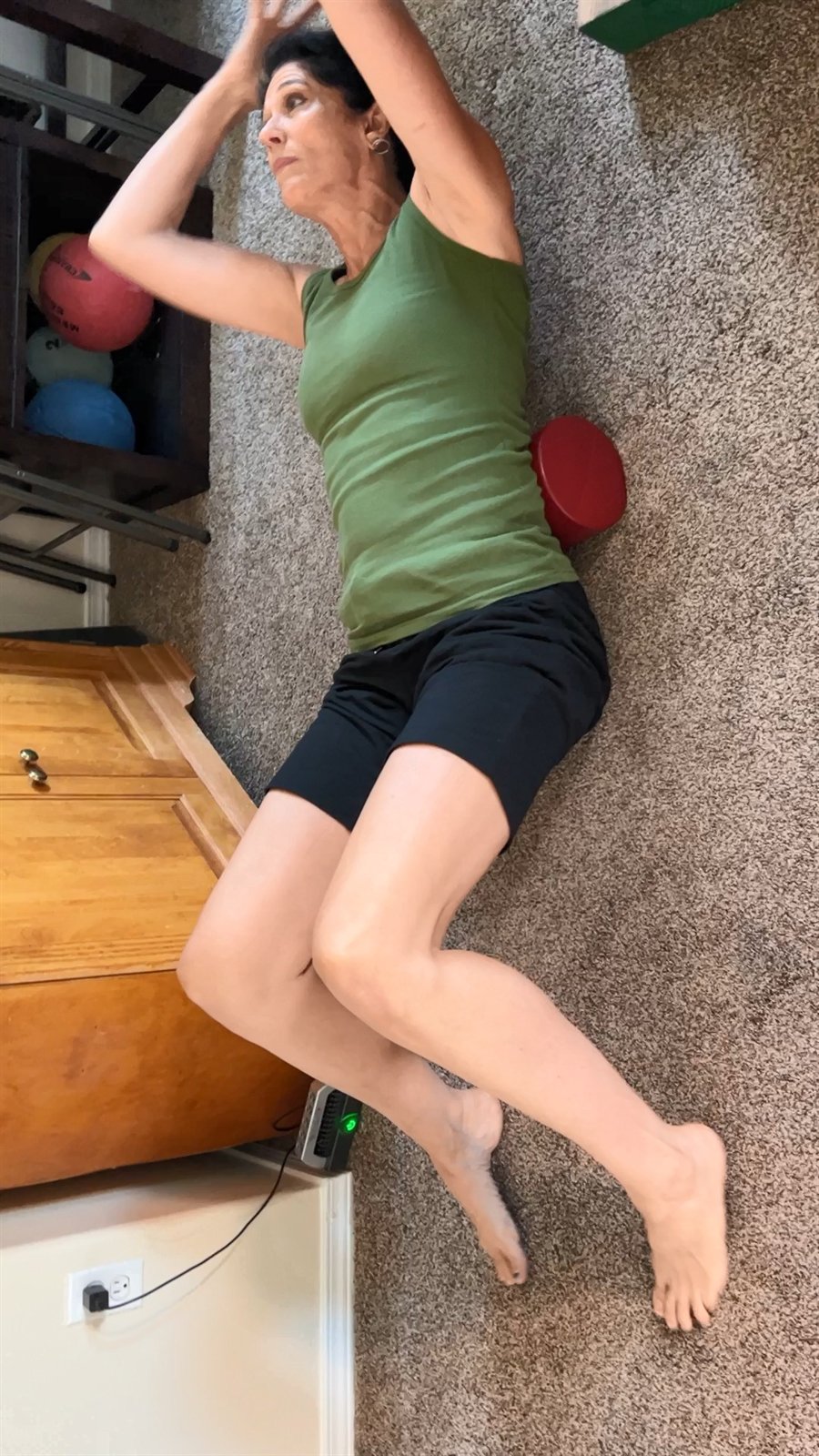
The book states that most floor-based sit-ups encourage a posterior pelvic tilt and a flattened lumbar spine, and many people “pelvic tilt” on a flat surface by flattening the lumbar spine and bracing globally. On the PowerCushion the lumbar spine is placed into a lordotic arch while the abdominal muscles contract through a supported range of motion.
Density and diameter set the curve
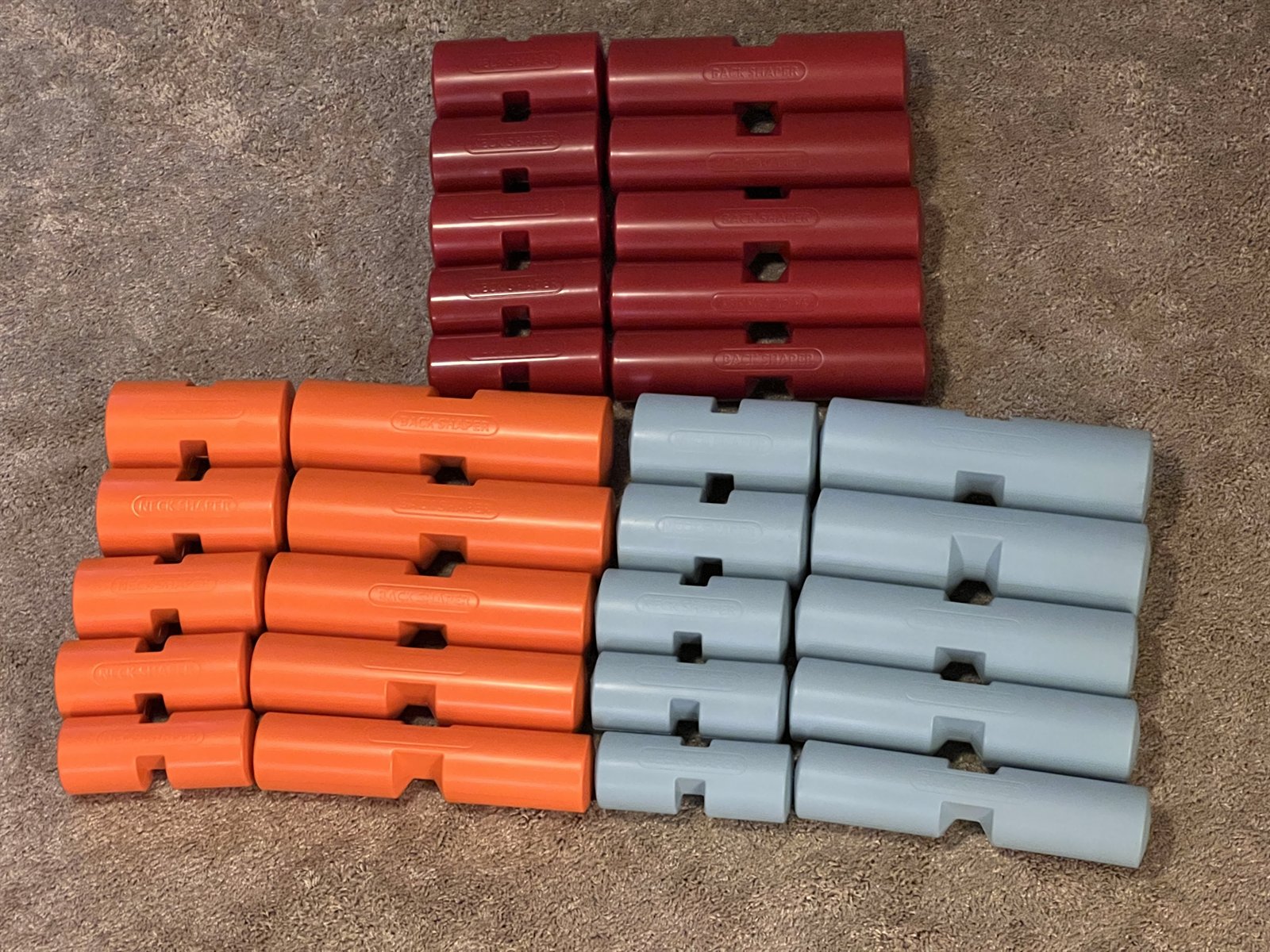
The book states: “The firmness and diameter of the fulcrum determine the degree of curve imposed and therefore the mechanical environment in which the muscles are training.” Its setup rule is to start with the softer option for stiff, painful, injured or highly guarded spines. A support that is too soft defeats the purpose, because it does not set the spine into the position needed for adaptation. The book names 2 levers for intensity in any exercise: the external load, and the density and diameter of the fulcrum.
The Pelvic Tilt over the cushion
The Pelvic Tilt is the book’s primary segmental exercise, aimed at the L4 to S1 relationship. The hips sit in the cutout, the lower lumbar spinous processes rest in the spinal groove, and both legs stay fully extended. The mechanism comes first. In the book’s model, approximately 70 pounds of resistance presses down through the anterior superior iliac spines, the front points of the pelvis, while the rectus abdominis lifts the pubic bone up toward the xiphoid process. Because the lumbar spine on the cushion is the fulcrum and the sacrum hangs free below it, the pelvis rotates around that fulcrum: the front tilts up and the sacrum is driven down and back. The sacrum pulls L5 down relative to L4, and the same downward shear repeats at each level above. At each joint the superior facet of the lower vertebra is driven into the facet above it, so the shear is arrested passively, bone on bone, starting at the sacrum. The book classes this controlled shear as corrective, in contrast to the posterior shear of a flat-surface sit-up, which the fulcrum intercepts. The resultant is approximately 201 pounds through the lower lumbar spine, and Scherger’s shear figures run from 149 pounds at S-L5 down to 7 pounds at L1-T12. The book’s summary: “The muscle is the mechanism. The shear is the therapy.” The resistance over the front of the pelvis comes from the Targeted Weight Applicator in its hip configuration, which directs vertical pressure over the anterior superior iliac spines.
The Sit-Up over the cushion
The Sit-Up is Phase 3 of the correction loop, the structural rebuild, where the curves are restored while the trunk moves against gravity and resistance. With a 100-pound upper trunk as the resistance, the book’s proper-posture figures are 170 pounds of effort, a resultant of 196 pounds per joint, total compression of 1,176 pounds and zero total shear, using 2 muscles, the external obliques, and 6 joints. The book states that the resultant runs in the direction of the effort arm, so it is received entirely as compression, with no multifidus stabilization required. The best improper-posture model needs 388 pounds of effort with 1,639 pounds of compression.
Setup is fixed: buttocks against the cushion with zero gap, a start at about a 45-degree trunk angle, and a recline only as far as the neck stays neutral. The cue on the way up is “rib to hip,” leading with the chest so the head does not lead the spine. In early sessions the trainer supports the weight of the head, and after initial training a soft cervical collar may be used temporarily while the neck muscles strengthen. Loaded progressions use the chest configuration of the Targeted Weight Applicator, a barbell mount that loads the corrective line of pull and trains thoracic extension under load at each spinal level.
Doses in the book
The book’s desk standard places 6 to 10 Sit-Ups over the PowerCushion at a light density in a 3 to 5 minute mid-shift reset. Its warehouse standard adds 10 Pelvic Tilt reps over the fulcrum before the shift and 10 to 15 Sit-Ups after it. Reps, range or density rise only when the current dose no longer produces the intended strain. Pain, numbness, tingling and dizziness are the book’s stop signs: stop, get evaluated, and continue with a therapeutic exercise program designed by a Spinal Fitness expert.
Booking
The 60-minute Spinal Fitness Evaluation ($150) includes the back-pain history, 20 minutes over the rolls, a printed PostureScreen software report and the first therapeutic exercises. One-on-one training with Eileen Durfee, an NASM Certified Personal Trainer, is $50 a session or $250 for 6 sessions; the initial training session runs 30 minutes and follow-up sessions run 20 minutes. Call or text 509-670-9713, evenings and weekends included. From 214 E. Albany Ave, the center serves Kennewick, Pasco, Richland, West Richland, Benton City and Walla Walla.
Keep Exploring
This article is for educational purposes only.