
Chapter 20 of Eileen Durfee’s book, Spinal Fitness, classifies a hair chart’s overall metabolic pattern from 2 ratios, calcium-to-potassium and sodium-to-magnesium, and states that the same exercise intensity or sauna duration may suit one pattern and work against another. At Spinal Fitness Health and Wellness Center in Kennewick, WA, that classification sets how the hot exercise room, 20 to 40 minutes at up to 155°F, and training are dosed.
The 2 ratios, read as a range
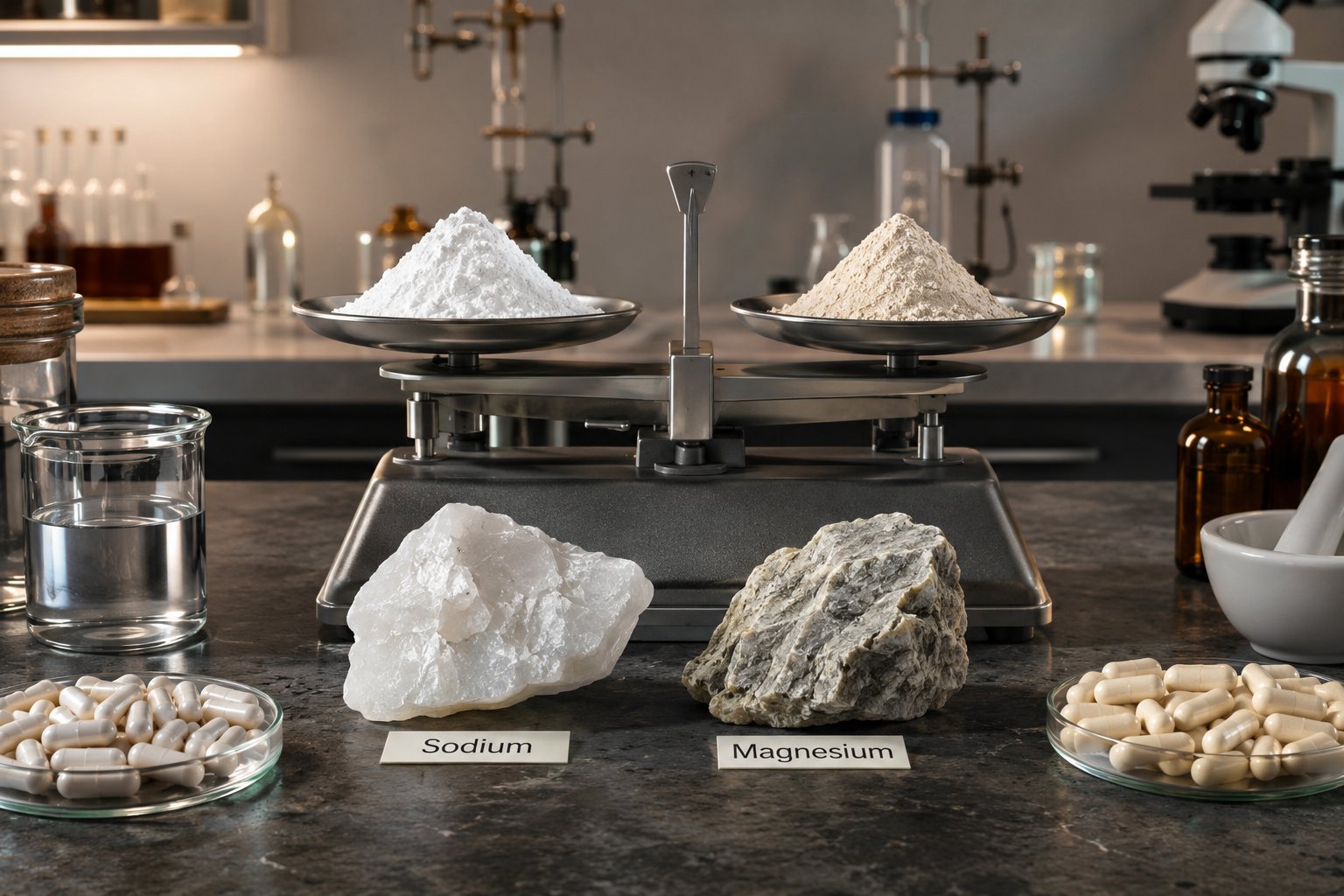
The calcium-to-potassium ratio, which the book calls the thyroid ratio, has an ideal of 4 at Analytical Research Labs (ARL) and 4.2 at Trace Elements, Inc. (TEI), the laboratory that processes the center’s HTMA Profile 2. The sodium-to-magnesium ratio, the adrenal ratio, has an ideal of 4.17 at ARL and 4 at TEI. The center reads each as a range, 4 to 4.2 and 4 to 4.17, and a value between the 2 ideals reads as balanced on either laboratory’s figure.
The 3 patterns
- Fast pattern: calcium-to-potassium below 4 and sodium-to-magnesium above 4.17, the book’s cut-offs. The book describes the body as driven, warm or restless, burning through nutrients quickly.
- Slow pattern: calcium-to-potassium above 4 and sodium-to-magnesium below 4.17 in the book; on the TEI figures, above 4.2 and below 4. The book describes a body that may feel tired, cold, stiff or resistant to change.
- Mixed pattern: the 2 ratios move in opposite directions. The book states that a mixed chart needs more careful interpretation and benefits from retesting and symptom tracking over time.
TEI’s own terms are Fast Metabolic type, with sympathetic dominance, and Slow Metabolic type, with parasympathetic dominance. TEI’s 2020 figures put the population split at about 70% slow and 30% fast.
Heat dosing by pattern
The book’s guidance for a fast pattern is careful sauna dosing, with calming minerals, adequate protein and healthy fats; it states that excessive heat or detoxification may further stress the system if minerals are not restored. For a slow pattern it lists warming therapies, mineral support, gentle movement, circulation support and gradual progression, and adds that sauna therapy can be especially valuable, with shorter sessions at first to avoid depletion. The book’s pre-training sauna session is typically 10 to 15 minutes at comfortable intensity, which sits under the hot room’s 20-to-40-minute range.
Training tolerance by ratio
The book links the calcium-to-potassium ratio, the thyroid ratio, to tissue repair speed, exercise tolerance, body temperature and recovery pace. Its trends:
- From 4 to 8: a mild sluggish thyroid trend, with an estimated 10 to 25% energy loss in the model; 8 to 16 moderate (25 to 50%).
- From 2 to 4: a mild fast thyroid trend (10 to 25% loss); 1 to 2 moderate (25 to 50%).
The book reads the sodium-to-magnesium ratio as a measure of how much recovery stress the body can handle at present. Its trends:
- From 4.17 to 8: a mild overactive adrenal trend, with an estimated 10 to 25% energy loss in the model; 8 to 16 moderate (25 to 50%); above 16 extreme (over 50%).
- From 2 to 4.17: a mild sluggish adrenal trend (10 to 25% loss); 1 to 2 moderate (25 to 50%); below 1 an adrenal insufficiency pattern (over 50%).
The book’s application: an overactive pattern may push hard but burn out or become inflamed, and a sluggish pattern may need very gradual progression, more rest, mineral support and gentle sauna exposure before intensity is increased. The book states that its energy-loss estimates are part of the interpretive model, not literal measurements.
A sodium reading that misleads
The book states that sodium may be artificially elevated by toxic metals, naming cadmium, mercury, copper, iron and nickel, which raises the sodium-to-magnesium ratio even when true adrenal function is low. Its rule: evaluate toxic metals before drawing conclusions from the adrenal ratio. TEI’s toxic limits include mercury below 0.10 mg% and cadmium below 0.04 mg%.
Reading the pattern across retests
TEI’s 2010 reference set gives each ratio an acceptable range around its ideal: calcium-to-potassium 2.2 to 6.2 and sodium-to-magnesium 2 to 6. The book states that HTMA is most useful as a monitoring tool over time, not a one-time snapshot, and that a ratio may temporarily look worse on a retest while the person feels and functions better, when the body is mobilizing stored toxins or shifting mineral patterns. Its rule for reading a retest is the full chart: all ratios, mineral levels, toxic metals and symptoms together.
The stop signs
The hot room’s page names dizziness, nausea, confusion, unusual shortness of breath and faintness as reasons to stop exercising. In Spinal Fitness training, pain, numbness, tingling and dizziness are the book’s stop signs: they are signs to stop, get evaluated, and then proceed with a therapeutic exercise program designed by a Spinal Fitness expert.
Testing and training in Kennewick
The HTMA Profile 2 is $270, processed by Trace Elements, Inc. Spinal Fitness Health and Wellness Center is at 214 E. Albany Ave, Building E101, Kennewick, WA 99336, serving Kennewick, Pasco, Richland, West Richland, Benton City and Walla Walla; call or text 509-670-9713, evenings and weekends included. The $150 Month-to-Month membership includes the near-infrared saunas and the general and spinal fitness equipment, with 24/7 door-code access once training is complete. Every Thursday from 2 to 6 PM new visitors can come in for a free session of the rotating service. Eileen Durfee founded the center and is a NASM Certified Personal Trainer and the inventor of Spinal Fitness.
Keep Exploring
This article is for educational purposes only.