Inside the 60-Minute Posture Evaluation in Kennewick: History, Rolls, Report and First Exercises

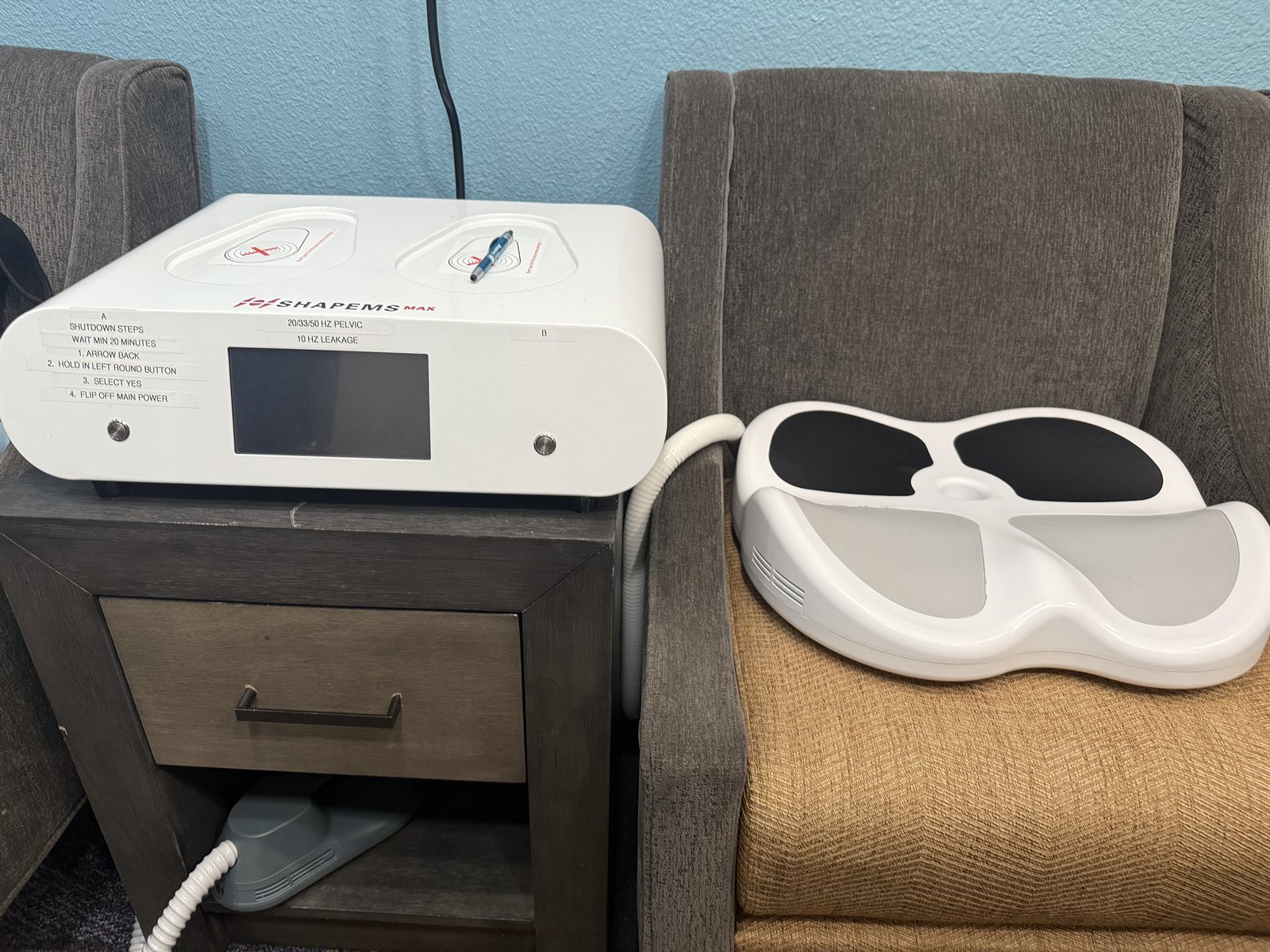
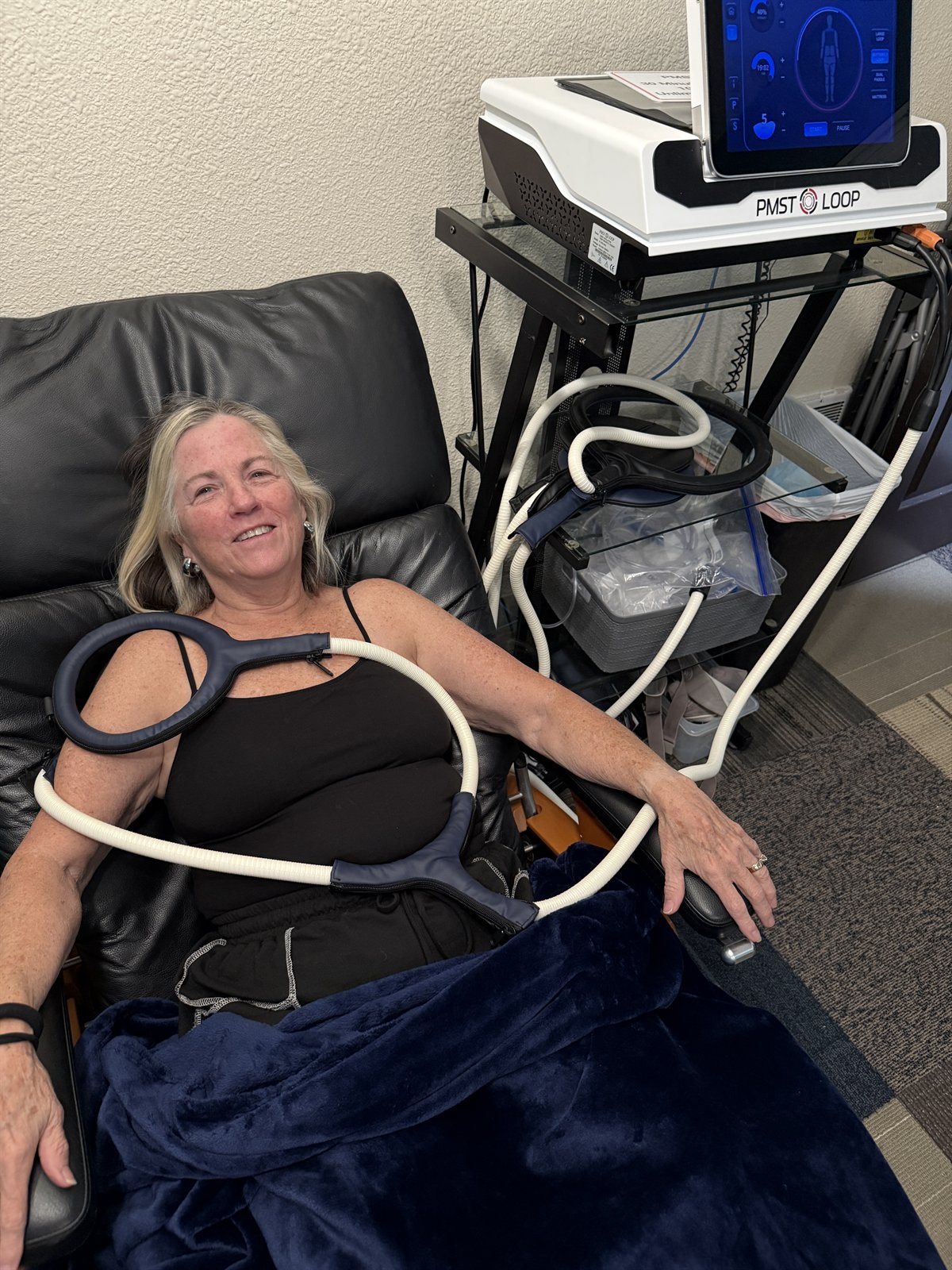
The Spinal Fitness Evaluation at Spinal Fitness Health and Wellness Center in Kennewick, WA takes 60 minutes and costs $150. Twenty of those minutes are spent lying over the Neck and Back Shaper rolls; the rest covers the client’s back-pain history, a PostureScreen software scan with a printed report, and the first therapeutic exercises. Eileen Durfee, an NASM Certified Personal Trainer, runs each evaluation at 214 E. Albany Ave, Building E101, Kennewick, WA 99336. Members hold 24/7 access through a door code issued once their training is complete, and every Thursday from 2 to 6 PM the center is open to new visitors for a free session of one rotating service: the BioCharger NG, the 7 Wave light panel, Brown’s Gas, PEMF or the hot sauna exercise room. Evaluations and training are booked appointments.
The back-pain history
Eileen’s book, Spinal Fitness, sets a screening order of 5 parts: a safety screen, an exposure profile, a posture and curvature screen, a tolerance check, and a track assignment with a first-week dosing plan. The book uses the safety screen to “decide when training should pause and when a medical referral is appropriate.” The book’s red flags include bowel or bladder changes, progressive weakness such as foot drop or rapidly worsening grip strength, recent significant trauma, and severe radiating pain with worsening numbness or tingling that does not settle with rest.
The exposure profile asks how the body is loaded each day. The book’s questions: how many total hours of sitting and of driving per day; how often the person lifts, carries, pushes, pulls or handles awkward loads; whether there is vibration exposure from a forklift, delivery truck or heavy equipment; which posture the person collapses into late in the shift; and what has flared symptoms in the past 30 days and what helps them settle.
Sizing, then 20 minutes over the rolls
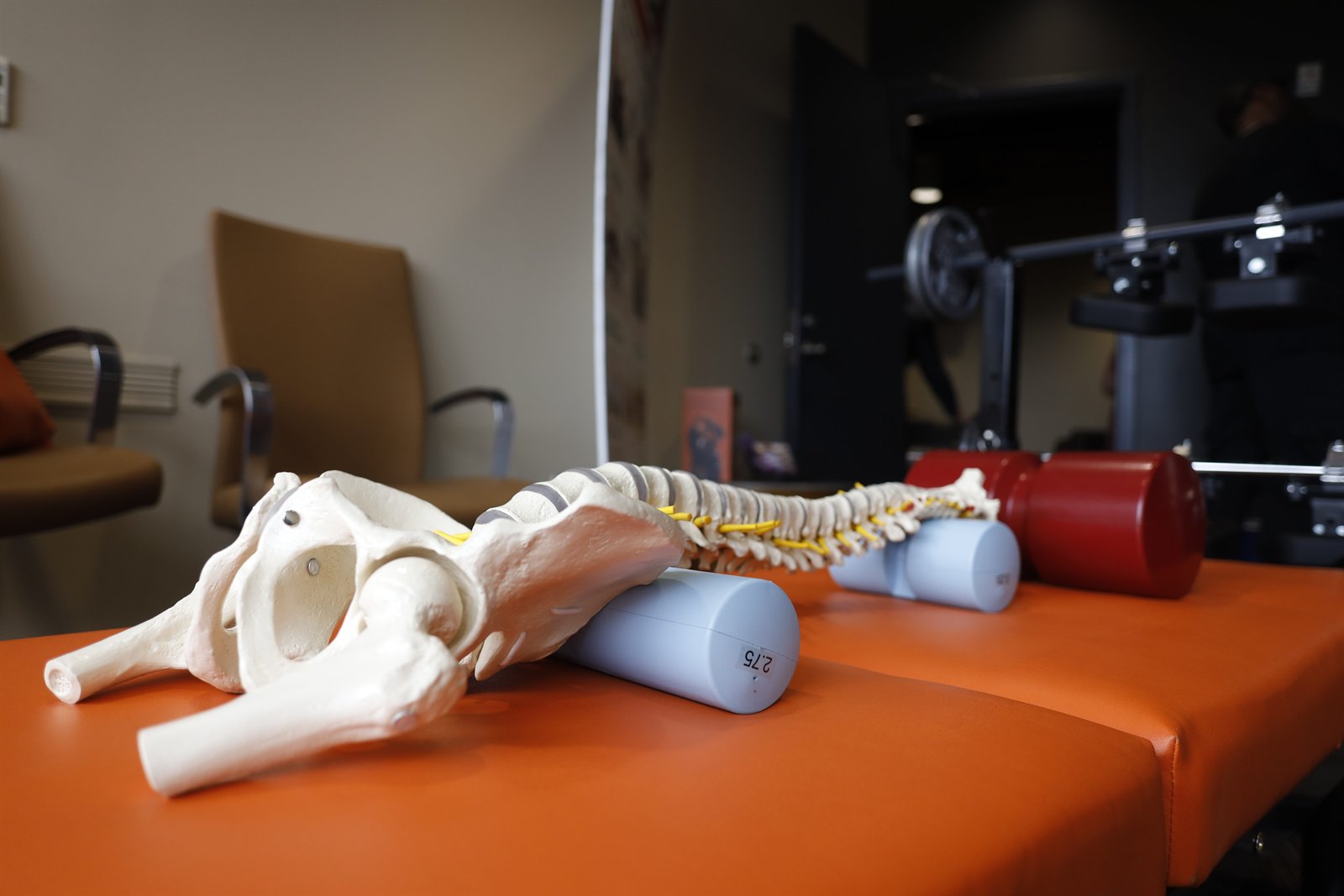
The evaluation page states that each client is sized first for one neck roll and one low back roll. The book lists 5 diameters, 2.75, 3.0, 3.25, 3.5 and 3.75 inches; Neck Shaper rolls are 7 inches long and Back Shaper rolls are 12 inches long, and each roll has a center groove so the spinous processes float instead of pressing into the support. The page lists 3 densities.
The client then rests over the fitted rolls on an IntelligentThreads Reso blanket while posture images are captured. The page gives the mechanism: muscle spindles monitor the length and speed of a stretch, Golgi tendon organs monitor tension, and mechanoreceptors report position and pressure. All 3 resist sudden change, and with time and no load their protective signals settle, which takes about 18 minutes in this system. The book caps this supported rest at 18 to 20 minutes and states that it gives the joints, discs, fascia and nervous system a chance to settle into a more favorable shape while gravity is partially taken off the system.
For the discs, the book states that after early adulthood they rely on mechanical motion to move nutrients in and metabolic waste out, an osmotic process: “Compression squeezes fluid out of the disc. Decompression draws fresh fluid back in.” The page adds the sizing rule for this step: a roll too large or too firm keeps the body braced, and the position works only when it unloads the spine for the full duration.
The PostureScreen report
PostureScreen analysis software digitizes the captured images into measurements, and the client receives a printed full-color report. The book’s screen looks for 3 patterns: a forward head, a flattened lumbar curve, and trunk mass forward of the hips. Its side-view check is whether the ear, the shoulder and the greater trochanter stack in 1 vertical line, and the book states that each inch of forward head position adds approximately 10 pounds of effective load to the cervical spine. The report is also the baseline that a later re-screen is compared against.
The first therapeutic exercises
The book’s standard starting point is Step 1, Back Trac rolling, and it names 3 exceptions read from the screen. A primarily cervical pattern, with a forward head and a functional lumbar region, starts with Step 4, Neck Flexion, before rolling. A mostly green screen with good segmental motion and low muscle tone starts with Step 2, the Pelvic Tilt over the PowerCushion, then Step 3, the Sit-Up, with Back Trac rolling at the end. A mostly red screen with high muscle tone starts with Step 5 only, the Spinal Twist plus the Shaper rolls, and is re-screened after 2 to 3 sessions. The book’s principle: “the correct starting step is the one the body can currently accept without guarding, bracing, or pain.”
The client leaves with the exercises for that pattern and written instruction sheets, and the evaluation page states that the first training session is scheduled before the client leaves.
Training, membership and booking
One-on-one training is $50 a session or $250 for 6 sessions, and the initial training session runs 30 minutes and follow-up sessions run 20 minutes; group Spinal Fitness sessions are 20 minutes at $35, or 6 sessions for $180. A re-screen is $100. The $150 monthly membership includes the general and spinal fitness equipment with 24/7 member access after training. Visits are by appointment: call or text 509-670-9713, evenings and weekends included. From 214 E. Albany Ave, the center serves Kennewick, Pasco, Richland, West Richland, Benton City and Walla Walla.
Keep Exploring
This article is for educational purposes only.