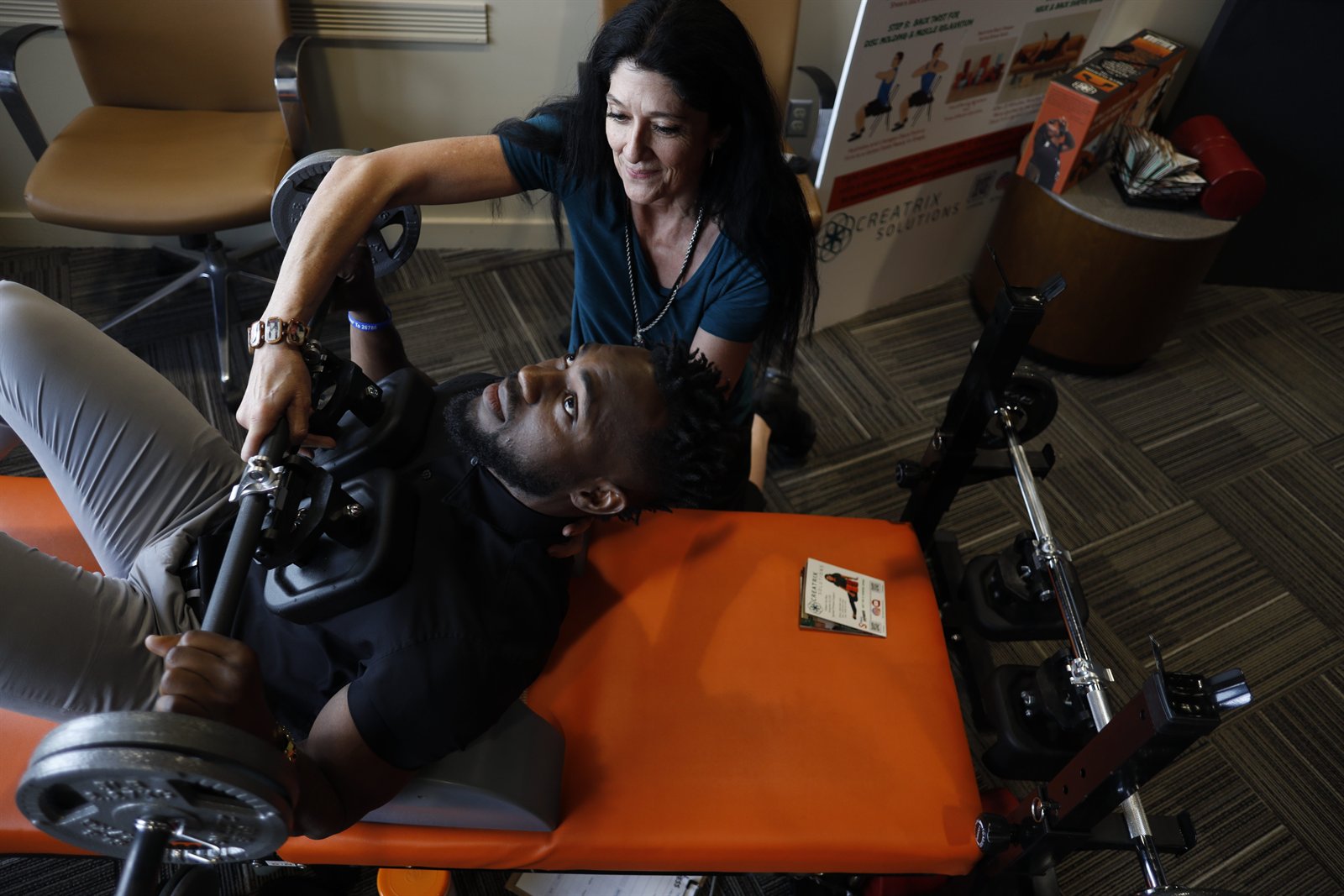

Personal training at Spinal Fitness Health and Wellness Center in Kennewick, WA is booked with Eileen Durfee, an NASM Certified Personal Trainer. One-on-one Spinal Fitness training sessions are published at $50 a session or $250 for 6 sessions; the initial training session runs 30 minutes and follow-up sessions run 20 minutes. The training follows the order set in her book, Spinal Fitness: “structure first, strength second.” The center is at 214 E. Albany Ave, Building E101, Kennewick, WA 99336, and members on the $150 monthly plan use the strength and cardio equipment 24/7 by door code once their training is complete. Every Thursday from 2 to 6 PM the center is open to new visitors for a free session of one rotating service: the BioCharger NG, the 7 Wave light panel, Brown’s Gas, PEMF or the hot sauna exercise room. Evaluations and training are booked appointments.
Why structure comes before muscle
The book’s lever model puts a number on spinal structure: in Dr. John S. Scherger’s broad model, proper spinal structure needs 77 pounds of total effort and 1,218 pounds of compression for the same work that improper structure performs with 1,166 pounds of effort and 2,708 pounds of compression: a 15-to-1 difference in effort and about 2-to-1 in compression. The book’s plain-language thesis on leverage: “Good structure creates more strength with less strain. Poor structure creates more strain with less strength.” Its athletic chapter states the result for training: “More muscular effort is available for performance. Fast-twitch fibres remain available for explosive movement.”
Fast-twitch fibers and posture
The book states that fast-twitch muscle fibers are recruited for explosive, powerful movement, not for slow, steady postural work. When the spine loses its curves and the center of mass moves forward of the hips, the posterior chain, including the hamstrings, spinal extensors and hip stabilizers, works continuously to hold the body upright. Over time, that continuous demand “signals the body to convert fast-twitch fibers to slow-twitch.”
The book’s formula for keeping fast-twitch recruitment has 2 parts. The external part is explosive training with adequate rest, not continuous endurance-style loading. The internal part is proper spinal posture, which places the muscles in a minimum energy state where the posterior chain is not constantly recruited for postural work.
Building muscle on a schedule that fits a week
The book defines every training dose by 3 dimensions: duration, intensity and frequency. It calls frequency “the most powerful lever for building postural adaptation over time, because adaptation responds to cumulative stimulus – not just peak effort.” At a plateau, its instruction is to check all 3 dimensions before adding reps: often the change is a slightly firmer fulcrum, or splitting 1 daily session into 2 shorter ones. Its summary: “The body adapts to the most consistent stimulus, not the most intense one.” Reps, range or density rise only when the current dose no longer produces the intended strain, or when form is cleaner with less compensation than in the previous session. At the center, follow-up training sessions run 20 minutes.
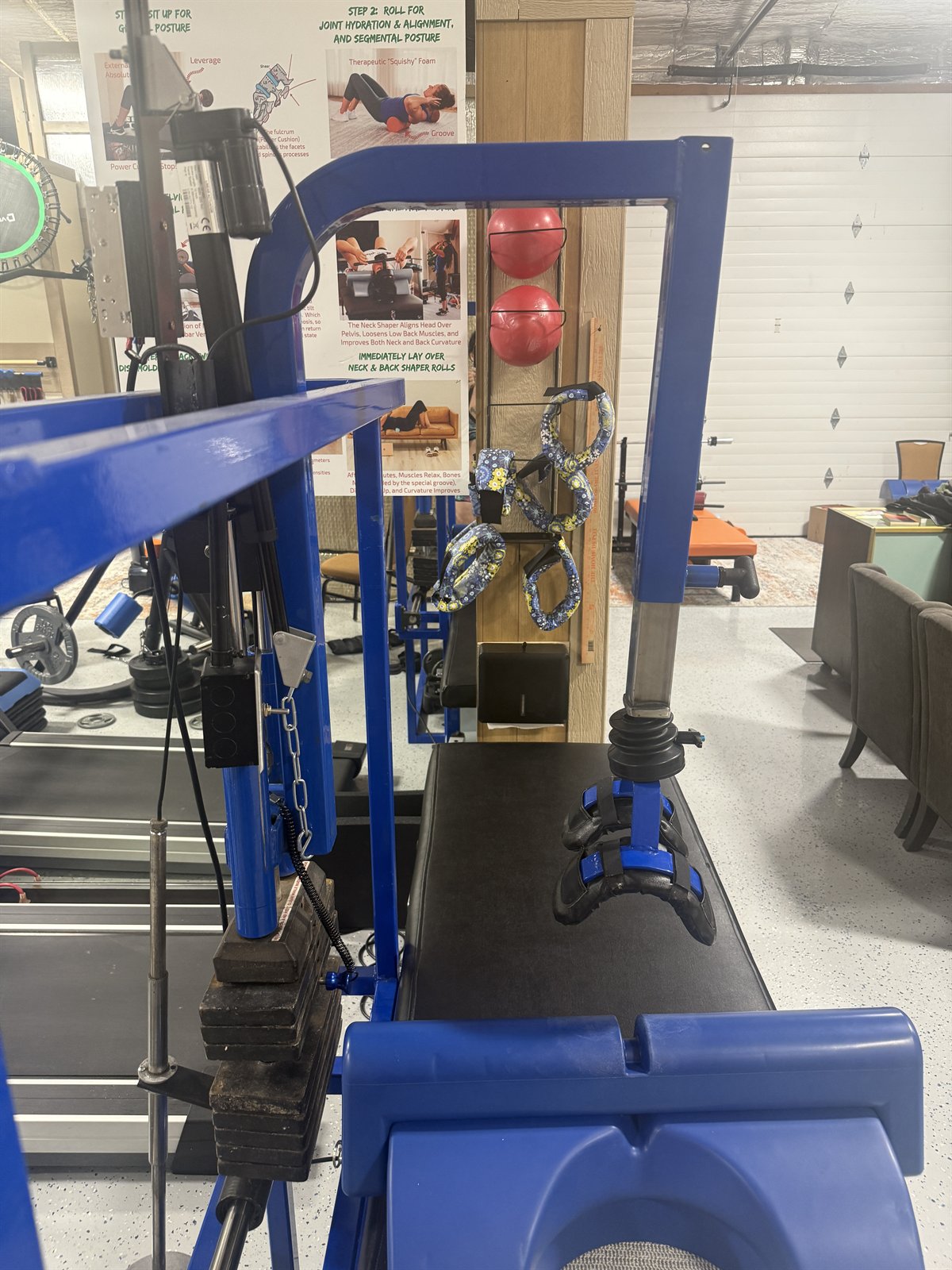
The center’s 24/7 fitness page lists the equipment members train on: a PowerCore Stepper, an elliptical, a Bowflex TreadClimber and a bicycle, with free weights, benches and posture-focused spinal fitness training tools throughout the center. The Spinal Fitness weight stack machine opens to a member once the skills for it are mastered in training.
Lifting with the curves supported
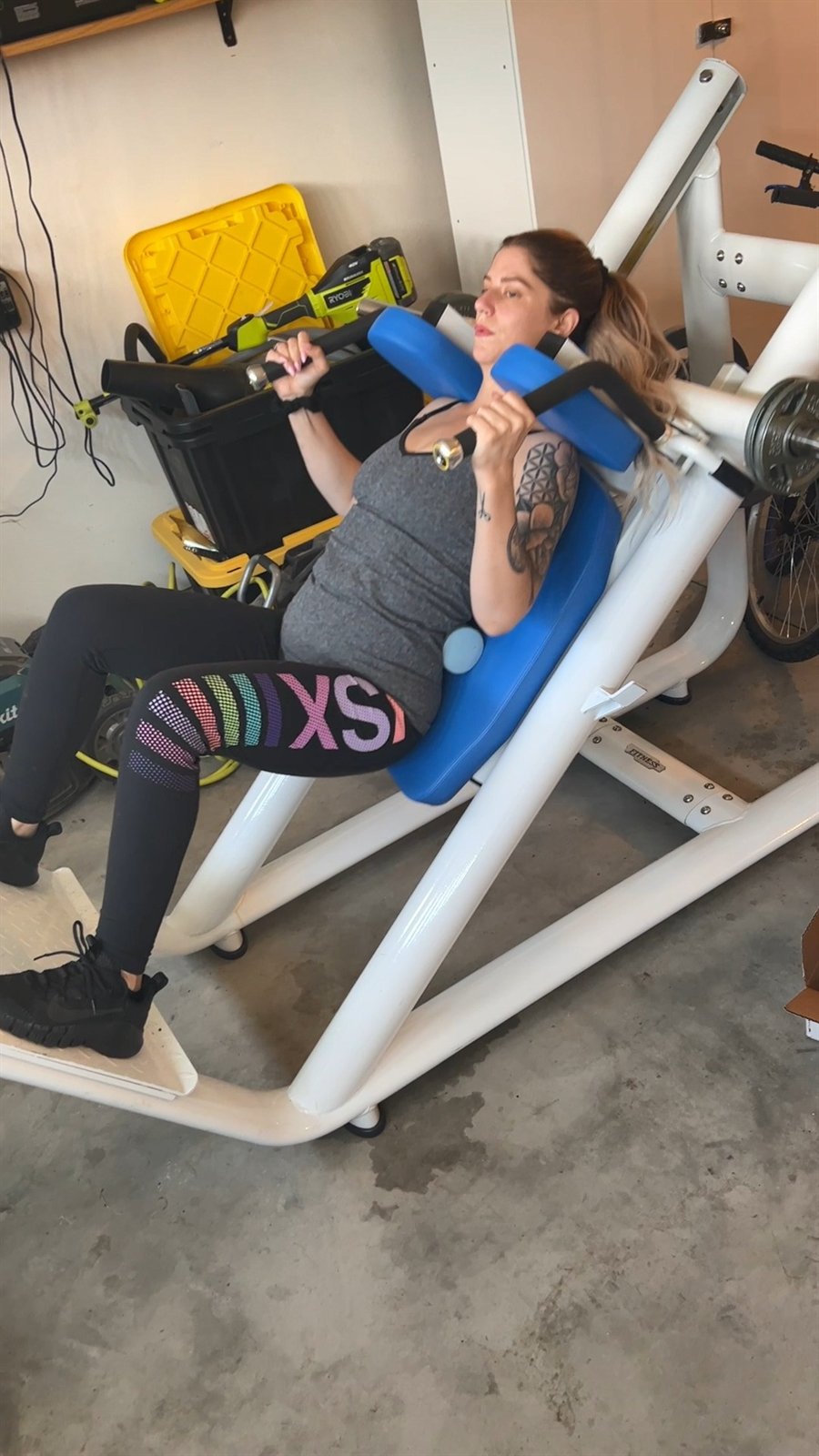
The book uses the Neck and Back Shaper rolls as braces during selected strength movements. On the leg press and hack squat, supporting the low-back curve reduces flattening and allows fuller, safer hip range of motion. On the bench press, supporting the natural spinal curves keeps the rib cage, pelvis and shoulder girdle in better alignment. Its 3 lifting cues for everyday loads are “Keep the load close. Hinge at the hips instead of the spine. Stay stacked.” Its principle for the posterior chain: “do not repeatedly load the posterior spine against resistance as a training strategy.”
The book approaches some exercises with caution: back extensions, bent-over rows, standing bicep curls, repetitive forward bending under load, and any exercise where the posterior spinal muscles are the primary movers. Scherger’s analysis puts L5-S1 compression above 1,200 pounds when a 100-pound upper body resists a force from behind, with proper or improper posture, and the book states that “there is no ‘correct form’ that makes this direction of movement safe at high loads or high repetition.” The book also states that deadlifts and Olympic lifts performed under expert coaching have their place in training.
Heat around a workout
The center’s hot exercise room uses a Sauna Fix tent, and the book gives its timing around training. A short pre-training session of 10 to 15 minutes at a comfortable intensity warms muscles and fascia, reduces morning stiffness and improves circulation before corrective movement. After training, the book’s order is to rest briefly, hydrate, use the sauna at a comfortable intensity, then shower and rehydrate with minerals: sodium, potassium, magnesium and trace minerals, not only water.
Starting point
The 60-minute Spinal Fitness Evaluation ($150) records the back-pain history, includes 20 minutes over the rolls, produces a PostureScreen software report printed for the client, and ends with the first therapeutic exercises. Pain, numbness, tingling and dizziness are the book’s stop signs: stop, get evaluated, and continue with a therapeutic exercise program designed by a Spinal Fitness expert. Call or text 509-670-9713, evenings and weekends included. From 214 E. Albany Ave, the center serves Kennewick, Pasco, Richland, West Richland, Benton City and Walla Walla.
Keep Exploring
This article is for educational purposes only.