
Spinal Posture Evaluation & Training
Find out what your posture is actually doing — measured, not estimated — then learn how to work with it.
Evaluation $150 · Training $50 a session (first session 30 min, follow-ups 20 min) · Kennewick, WA
Why start with an evaluation
Most people never get a clear picture of how their spine is positioned or how it moves. They know something feels off — stiffness getting out of the car, a neck that fatigues by afternoon, a lower back that complains after yard work — but “bad posture” is where the explanation stops.
A Spinal Posture Evaluation replaces that guesswork with specifics. You get a documented look at your alignment and movement patterns, and a plain-language explanation of what is contributing to what.
This is where every Spinal Fitness program begins, because a program built on assumptions is a program built on nothing.
What happens during your evaluation
You are sized first. We determine the correct Neck Shaper and Back Shaper diameter and density for your body — one neck roll and one low back roll.
Then you rest over your properly sized rolls with an IntelligentThreads Reso blanket, while your images are captured and digitized using PostureScreen analysis software.
We review your results together. You see your own measurements and images, and we go through what the patterns mean in plain language — what your spine is doing, and why.
You leave with materials, not just advice. A printed full-color report, the specific exercises for your pattern, and written instruction sheets so you can execute them correctly at home.
We schedule your training session before you leave — the one-on-one session that brings you up to speed on the equipment.
Your measurements, your report, your exercises, your correct roll sizes, and a scheduled next step.
What is actually happening when you lie over the rolls
Step 5 of the Spinal Fitness system has you resting over your fitted rolls. It looks like nothing is happening. That is precisely the point.
Your spine carries gravity all day. Standing, sitting, driving — the load never fully comes off, and the muscles around your spine stay working to manage it. Lying over correctly sized rolls takes that load off. Supported and unloaded, your body is no longer defending a position.
That is when the nervous system lets go. Muscle spindles monitor length and speed of stretch. Golgi tendon organs monitor tension. Mechanoreceptors report position and pressure. All of them exist to resist sudden change — which is why forcing a stretch rarely produces lasting change. But given time without load, those protective signals settle on their own. In this system that takes about 18 minutes.
You are not making anything happen. You are removing the reason your body was holding on.
Many people notice audible releases during this, and a distinct sense of letting go.
This is also why sizing matters so much. The position has to genuinely unload you for the full duration. A roll that is too large or too firm for your build keeps you braced — and bracing is the opposite of what the step requires.
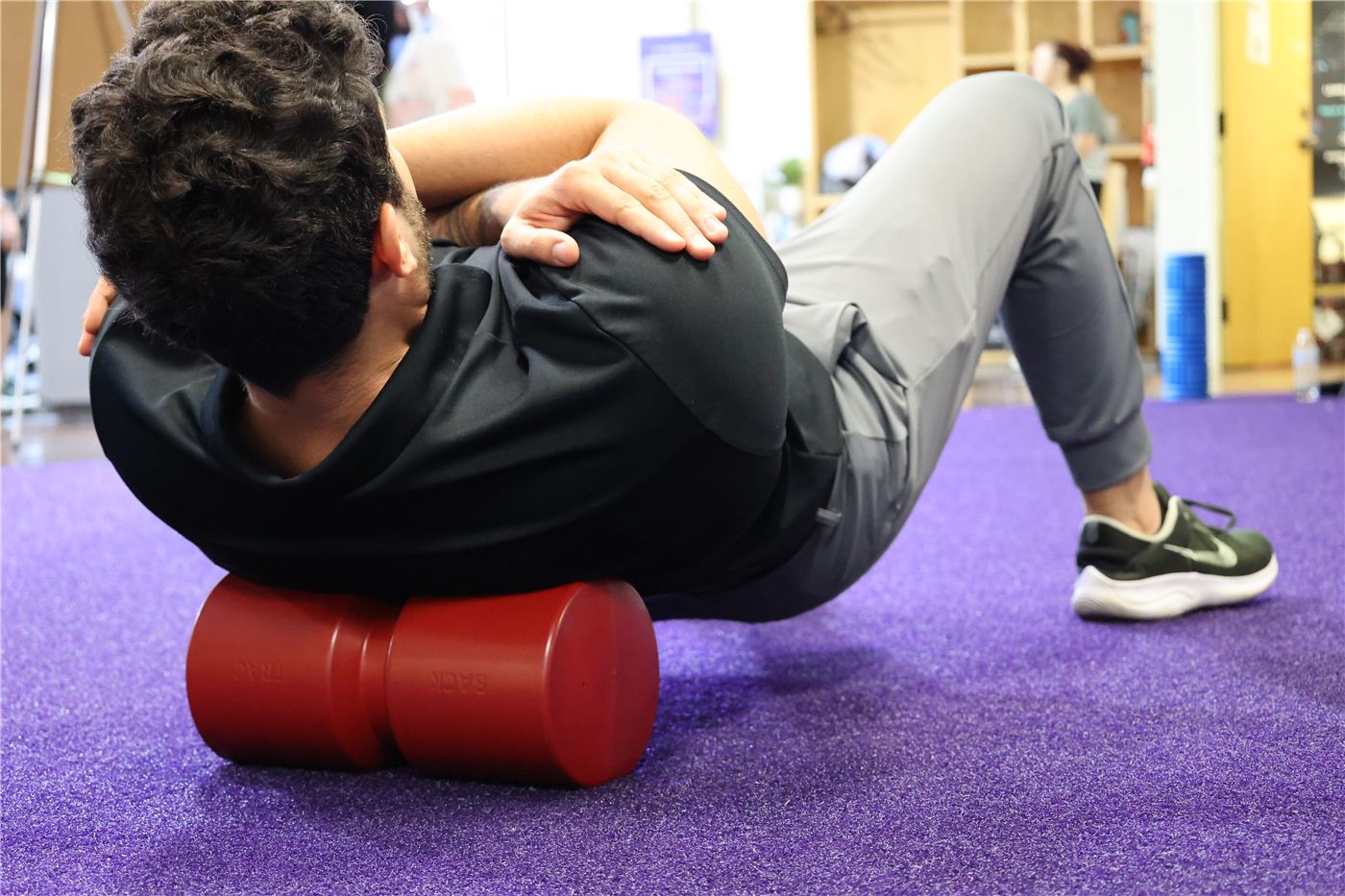
Members also have IntelligentThreads Reso blankets — Level 1 Reset and Level III Elevate Complete Performance — available to use during this step.
Measured, not estimated
Most posture assessments amount to someone looking at you and offering an opinion. This evaluation uses PostureScreen digital analysis software to capture and measure your alignment. You get numbers and images rather than impressions.
That matters for two reasons. First, it removes guesswork from the recommendations: your roll sizing and starting plan are based on what was actually measured. Second, it gives you a baseline — screen again months later and you can see what changed instead of wondering whether anything did.
Alongside the digital analysis, your movement is assessed directly, because how your spine moves tells a different story than how it stands. Both matter.
About the sizing
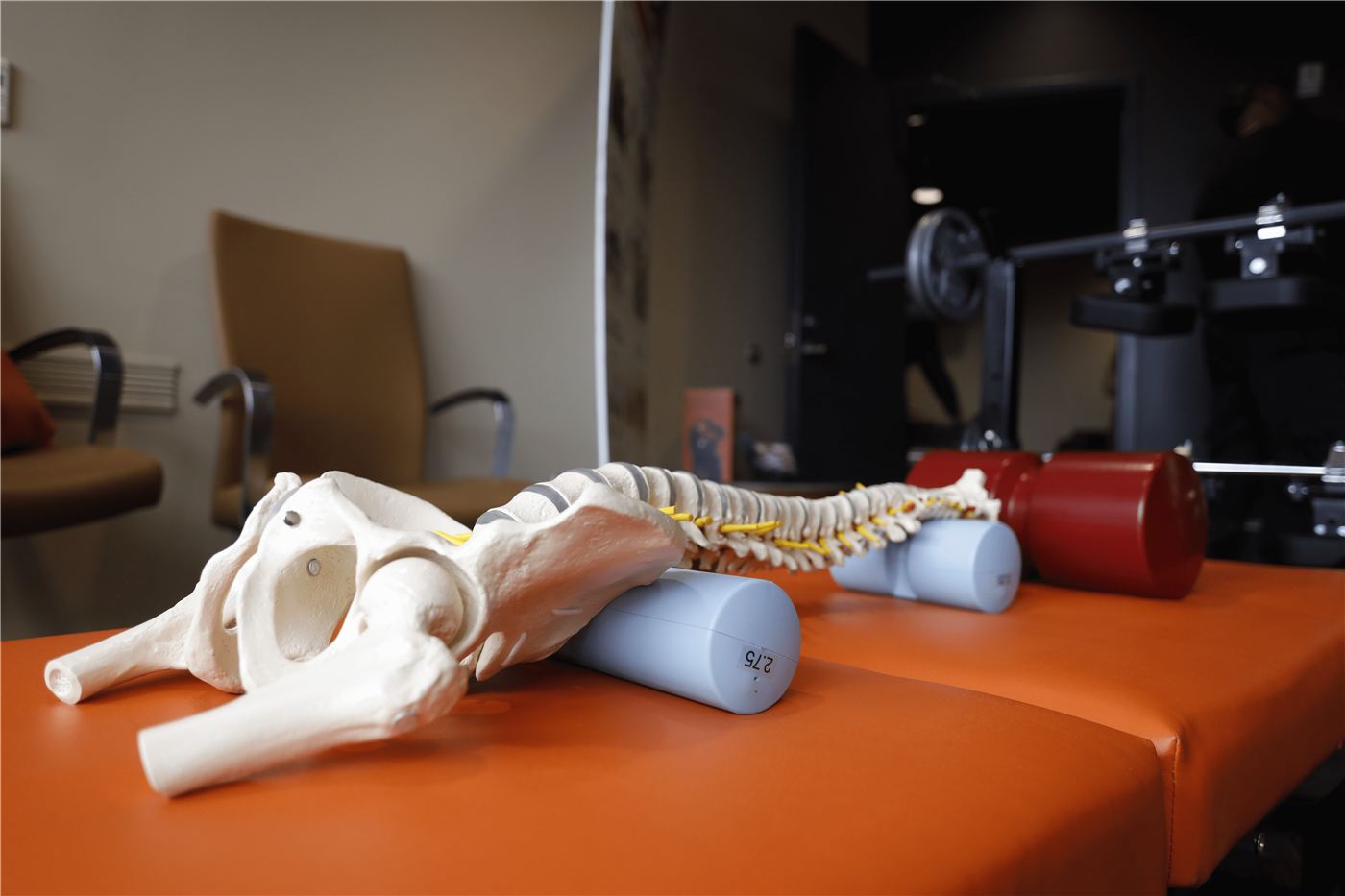
Neck and Back Shapers come in five diameters and three densities. Which combination is right depends on your frame, your existing curves, and how your spine currently moves. There is no universal size, and the difference between the right roll and the wrong one is the difference between a tool that works for your body and one that sits in a closet.
What you actually need is two rolls: one for your neck, one for your low back. That is the standard starting setup, and the evaluation tells you the correct size and density for each.
Together, those two rolls start at about $60. Depending on your sizing, the pair typically runs $60 to $120. You do not need a full set — sets exist for people who want the complete range of sizes, but the two rolls fitted to your body are what the program is built on.
Three ways to get the right rolls
Come in and try them
Stop by during business hours and lay over the actual rolls. Feel the difference between diameters and densities yourself, then buy what fits. No appointment, no evaluation required.
Sizing Kit
For people who cannot make it in. Determine your sizes at home — and the pieces double as massage therapy balls afterward, so the kit stays useful once you have your rolls.
Full Evaluation
Sizing is included, but sizing is not what you are paying for. You are paying for the assessment, the explanation, and the plan. The correct roll sizes are a byproduct.
If you only want rolls, the first option is genuinely fine and costs nothing. Choose the evaluation when you want to know why your body is doing what it is doing.
Training sessions
Knowing your pattern is one thing; executing correctly is another. Training is one-on-one, 30 minutes per session, $50.
Training is also how you earn access to the Spinal Fitness weight stack machine. The machine is not available to members until skills are mastered — not as a formality, but because loaded spinal work done with the wrong mechanics is worth less than not doing it at all, and potentially worse. You train until you can execute correctly, and then the machine is yours to use.
- Correct use of your fitted rolls and the spinal fitness equipment
- Movement mechanics — the difference between doing an exercise and doing it well
- Progression toward the weight stack machine, and mastery of it
- Adjustments as your capacity changes
- Questions specific to your situation
Sessions are booked as you need them. Some people need a handful to reach competence and continue independently; others keep a standing session for accountability.
Re-screening
Because your first evaluation captured measurements and images, you have a baseline. A re-screen produces a side-by-side before and after — your original images and measurements next to your current ones, in the same report.
This is the part most posture advice cannot offer. You are not asked whether you feel different; you see the comparison. Where things have changed, you see it. Where they have not, we adjust the plan rather than repeating it.
Re-screening is $100 and includes an updated printed full-color report with your before and after. Most people re-screen after several months of consistent work.
Pricing at a glance
| Spinal Posture Evaluation | $150 One time. Digital analysis, movement assessment, roll sizing, printed full-color report, exercises and instruction sheets. |
|---|---|
| Training | $50 / 30 min Required to earn access to the Spinal Fitness weight stack machine. |
| Re-screen | $100 Side-by-side before and after against your baseline, with updated printed report. |
| Neck + low back rolls | from about $60 For the pair, sized to you. |
| Membership | $150 / month 24/7 access to the full facility. |
Where membership fits
Members have 24/7 access to the facility for $150 a month, which is how most people maintain the work long term. The path looks like this:
Evaluate — $150, one time. Measurements, report, exercises, and your correct roll sizes.
Train — $50 per 30 minutes, until skills are mastered. This is what unlocks the weight stack machine.
Maintain — $150/month membership for 24/7 access to the equipment on your own schedule.
Evaluation and training are billed separately from membership, and you can do either without the other. But the sequence exists for a reason: the evaluation tells you what to work on, training teaches you to do it safely, and membership gives you the access to keep doing it.
Who this is for
- People who sit for a living and feel it
- Anyone told they have “bad posture” without being told what to do about it
- Athletes and active people wanting to move well for the long haul
- People who want to understand their own body rather than be handed a generic routine
- Anyone starting a wellness program who wants a real baseline first
About your evaluator
Eileen Durfee is a former nuclear power quality engineer, an inventor with multiple patents in spinal fitness and wellness equipment, a NASM Certified Personal Trainer, and a Nationally Certified Spinal Fitness Specialist. She developed the Spinal Fitness system after working through her own significant spinal challenges — the equipment used here is equipment she designed.
Quality engineering in the nuclear industry is a discipline built on measurement, standards, and verification — you do not accept that something works because it seems to. That is why this evaluation measures your posture rather than estimating it, why you receive your actual numbers and images, and why a re-screen compares them side by side instead of asking how you feel.
It is the same standard applied to your spine.
Honest expectations
A Spinal Posture Evaluation is an assessment and education service. It is not a medical examination, diagnosis, or treatment, and it does not replace care from your physician or another licensed provider. If you are managing an injury or a diagnosed condition, talk with your healthcare provider about whether this is appropriate for you.
Results depend on consistency. The evaluation gives you the map; the work is yours to do.
Start with the evaluation
One appointment, $150, and you will know more about your spine than you do today.